United States v. Bhagat Singh Thind: On Gaining Citizenship & Losing Identity

What is one promise you make when you become a United States citizen? To give up loyalty to other countries.

I remember this very question from my parents’ civics test as part of their naturalization process. We moved here from India in 1998 on an H1-B visa, eventually became permanent residents, and then finally became citizens in 2012. I didn’t have to take the citizenship test myself since I was a minor, but I remember helping my parents study. This one question in particular made me pause and realize how significant this step was for us, ceremonially: we were officially becoming Americans now.

It’s a real privilege to become a United States citizen, and I’m not sure how many American-born people realize what immigrants give up – both physically and symbolically – and how grateful they are to become citizens. That’s why it stings when throughout history, American-ness has been conflated with whiteness, and this sentiment lingers to this very day. I’m especially reminded of this bitter truth today because February 19 marks the anniversary of a particular SCOTUS case decision that hits close to home: United States v. Bhagat Singh Thind (1923).

Thind, an Indian Sikh man, had come to the United States in 1913. Having obtained a bachelors degree from India, he wanted to further his education at the University of California Berkeley. He enlisted in the US Army, served in WWI, and was discharged honorably in 1918. After his discharge, he applied for citizenship in Oregon state, and was granted naturalization. Yet, soon after he became naturalized, an examiner appealed the decision. Thus began the fight for citizenship that eventually reached the Supreme Court. Thind’s citizenship was challenged because of the statutes of the time. The Naturalization Act of 1790 restricted naturalization to ‘any free white person’ of ‘good character’ and the Naturalization Act of 1870 extended citizenship to ‘aliens of African nativity and persons of African descent.’ In the Ozawa case the previous year, a Japanese-American man petitioned for naturalization on the grounds that he was white in skin color. In that case, the Supreme Court held that ‘white’ meant Caucasian, and hence denied him from gaining citizenship. The Ozawa case is a striking example of how whiteness was used as a defining factor of someone’s worthiness to be American.

Thind, relying on the Ozawa case rationale, used anthropological texts and studies to argue that he was from North India, the original home of the Aryan conquerors, and so that meant he was of Caucasian descent. Further, he argued that as a high-caste Indian himself, he had a repugnance towards marrying a “low-caste” Indian woman. One line from his actual argument reads: “the high-caste Hindu regards the aboriginal Indian Mongoloid in the same manner as the American regards the Negro” (note that the term ‘Hindu’ at the time was used not to describe religion, but as a racial and geographical marker). Despite his assertions, the court unanimously decided against Thind, upholding that Indian people are not white and cannot become citizens. This decision was not overruled until President Truman signed the Luce-Cellar Act of 1946.

It hurts that Thind was denied citizenship because of his ethnicity, but it pains me even more that he himself tried to disown his heritage. In both the Ozawa and Thind cases, these men didn’t challenge the discriminatory nature of the racial criteria, but instead contended that they were white, too. Maybe they didn’t think it was possible to win by challenging the racist motivations behind the laws of their day, or maybe they genuinely wanted to be white in order to fully belong. Either way, this mindset of being different than other minority groups, of somehow being “more white” lingers to this day.

The model minority stereotype today paints the narrative that Asian-Americans are the paragon of immigrant success stories. It perpetuates the idea that Asians achieve higher in education, rise to higher socioeconomic statuses, and overall attain more prosperity than other groups. This blanket statement undermines the diversity inherent within Asian-American experiences. Moreover, by creating a hierarchy and placing Asians at the top, this myth furthers racial wedges between minority groups, maintaining a sense of division among people of color. It advances the same problematic sentiment present in Thind’s argument, that we Asian immigrants are somehow better; under this logic, our status is more close to that of white people, and hence, we are more American.

The Thind case reminds me that the life of an immigrant is one of sacrifice: we leave behind our homes, our families, and everything we’ve ever known. But we give all this up with hope, because we love this country and have faith in the opportunities available for us here. We take an oath to ‘defend the Constitution and laws of the United States’, to ‘do important work for the nation if needed’. We are proud Americans, too. Please, do not pit us against other minority groups or make us give up the very essence of our identities to prove it.

Roma Gujarathi is a first-year student. She loves hearing from readers: email her at roma.gujarathi@bc.edu.
Celebrate Valentine’s Day With BC Law

Happy Valentine’s Day! Beyond the brightly colored candies and vivid decor hung in honor of the holiday, Valentine’s Day is all about showing your love for the people and things that mean the most to you. We decided to ask around about what students and faculty love most about BC Law. I’ve shared their responses below, and we’ll keep adding to this during the day. BC Law students, faculty and staff: share your own photos on social media with the hashtag #loveBCLaw!
Courtney Ruggeri with friends

I love BC Law because of the friends I’ve met and the memories we’ve made—both inside and outside the classroom. -Courtney Ruggeri ’21

Magazine editor Vicki Sanders

I love BC Law Magazine. Stories about our wonderful students, faculty, alumni and community—what’s not to love? -Vicki Sanders

LLM students

I love to see LLM students from all over the world, becoming friends thanks to BC Law! -Susan Simone Kang
Pictured: Fangzheng Li and Jiaying Chen, China, Cristina Ullrich, Germany, Milena Cuadra, Costa Rica, Ankita Rath, India and Nadia Bouquet, France.

My favorite thing about BC Law is studying on the fourth floor of the library. It is very sunny and gets me through the long hours of assigned reading. -Ross Budryk ’22

What I love most about BC Law is how pretty campus is in the winter. Coming from Miami, I still get excited when I see the snow! -Stephen Millan ’22

BC has a special place in my heart since I am a Double Eagle. Spending so many years here has given me a heightened appreciation for the Law School and the community. -Jessica Loiacono ’22

I love my Criminal Law class this semester. It is entertaining and suits my interests well. -Charles Enberg ’22

I love Legal Grounds coffee shop. Stopping by for a soda, coffee, or snack is the perfect midday pick-me-up. -Maxwell Black ’22

This is a little odd, but one of the things I love most about BC Law is the lockers in the basement. After class everyone heads to the lockers to switch out their books and we all chat about class and life. -Devon Sanders ’22

Weirdly enough, my favorite thing about BC Law is the East Wing. Last semester our section had all of our classes there, so now it just feels like home! – Rekha Korlipara ’22

I love the architecture of campus. BC Law is truly the Hogwarts of law schools! – Athanasia Kouskoulas ‘22

The friendships I have made is are what I love most about BC Law. —Becky Powell ’22

My favorite thing about BC Law is that professors are always friendly and welcoming – my favorite is seeing Professor Bloom roam around on the 4th floor of the library, stopping by our tables to say hi! -Selin Altintas ’22

Law Admissions Team after releasing 300 decisions #loveBCLaw #IamBCLaw #guesswholovesyoumore #watchout2023

I love that BC Law has given me the opportunity to live abroad and make even more new friends in my 3L year. The Dublin Semester in Practice has allowed me to immerse myself in a new culture while doing a deep dive into Irish immigration law. I could not think of a better way to finish the best three years! -Audrey McQuade (Pictured in the photo (in Dublin!) from left to right: Audrey McQuade, 2020 Nicole Chelkowski, 2021 Madeleine Gearan, 2020)

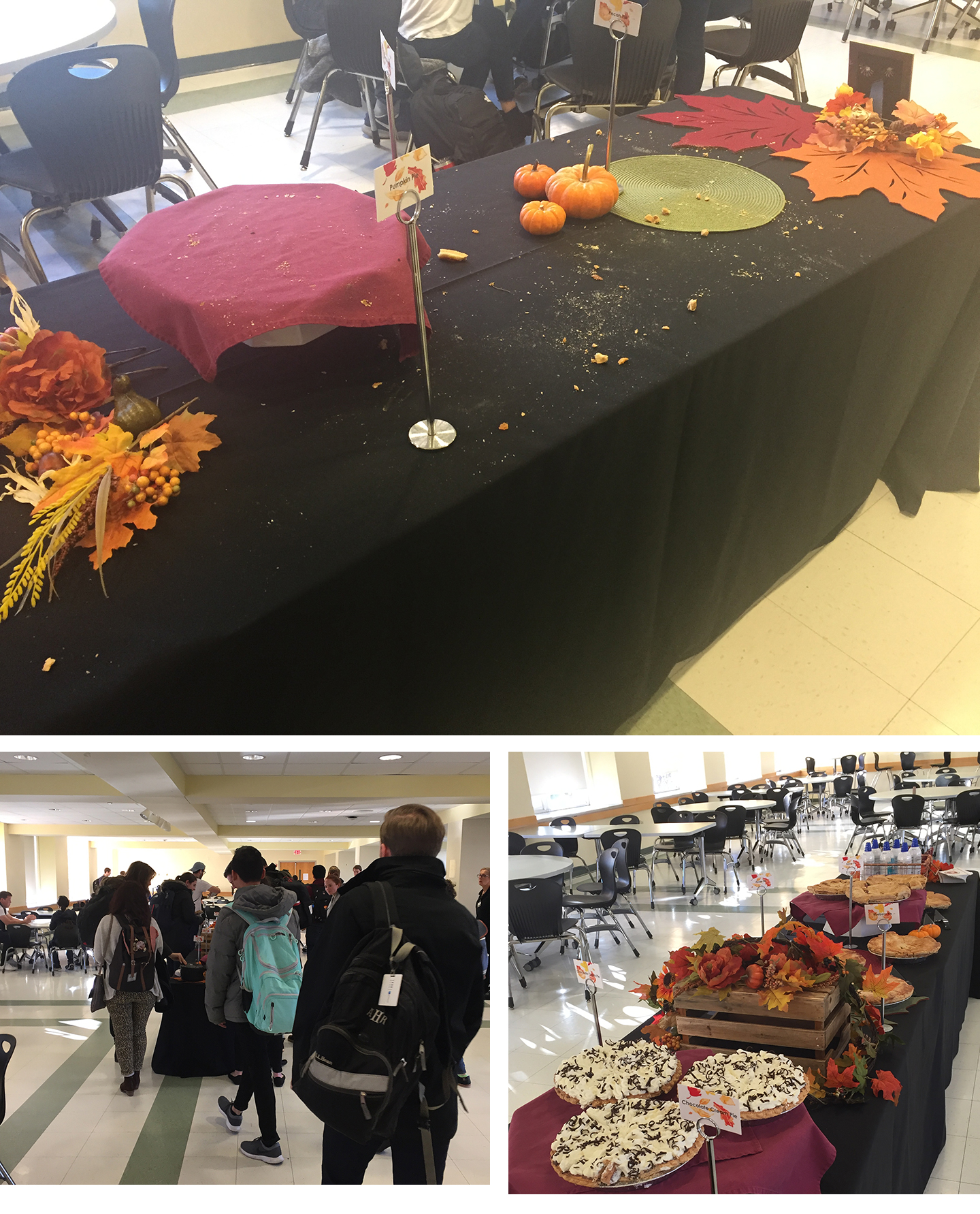
I love that the students enjoyed Harvest Desserts, aka Pie Day! – Theresa Kachmar

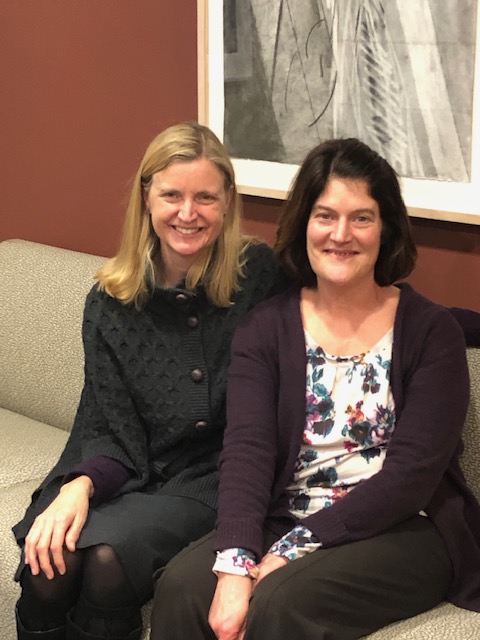
I’m sure I’m not alone in loving Dorothy Commons in our Career Services Office! -Heather Hayes

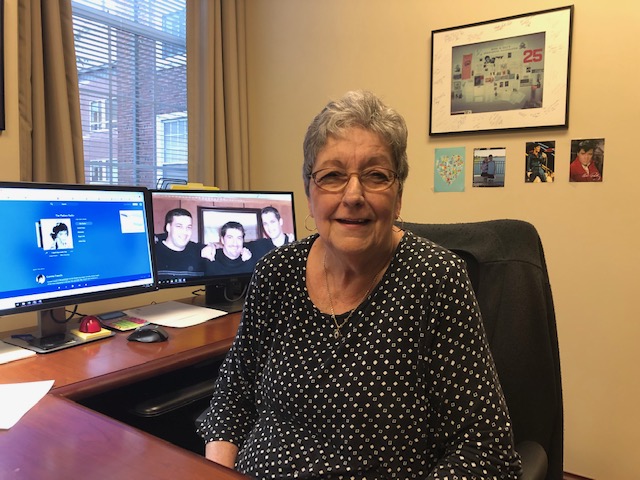
What I love about BC Law: one of my favorite people in the world, Pat Parlon! -Dean Rougeau

LLM: Our Journey to BC Law

Not everyone has the same journey to law school. In this week’s blog post, hear from LLM student Veronica Mulino about her family’s journey to Boston, and the various hurdles they faced after making the decision to come to the US for school.


My journey in Boston College began in Fall 2018. I was in Boston visiting for the holidays with my family. The last day of our trip, we decided to visit the BC Campus to gather some information on the LLM program for me and my husband.

We arrived at the Law School without any notice or a scheduled appointment, but we were welcomed with open arms by the Office of International Programs. We did a tour of the Law School and then discussed the program details and application. After a day of visiting, BC Law felt just like home. But I knew the process of applying to the program and actually attending was going to present difficulties for us, and at the time it seemed almost impossible. And yet, without knowing what the future was going to hold, my husband and I sent in our applications and were admitted. We were excited, but also worried: making the decision to move to another country together with a one-year old daughter seemed like a major challenge, with many obstacles to overcome.

Continue reading

A Look Back at an “Impactful” 2019

What a ride 2019 has been! I hope you all are enjoying a well-deserved break — baking on a beach somewhere warm — now that the semester is done and over with (whoo!).

KakaoTalk_20191220_011914911.jpg

Wrapping up a year full of ups and downs, we wanted to highlight a few of the most popular posts by our amazing writers at BC Law Impact:

With that, thank you for following BC Law Impact, happy holidays, remember to re-apply sunblock every 3 hours, and we look forward to seeing everyone in 2020!


Jae Lee is a second-year student who loves hearing from readers. Contact him at leecot@bc.edu.

What’s the Deal with Those Sleep Pods?

Nearly every time I’ve ever slept in my 22 years on this Earth, it has not been in a law school library. Enter: an email from the BC Law Library staff titled “The Sleep Pods have arrived!”

There are now sleep pods installed on the third floor of the library, a response to requests for a place to nap or zone out in order to refresh from our standard day-to-day cycle of reading cases, going to class, studying, outlining, and grubbing for the next opportunity to get free food.

We stay busy here at BC, and sure, sometimes we treat sleep as a luxury rather than a necessity. But then, sleeping doesn’t earn you any Lexis Points.

Continue reading

365 of 1L: A Word On Mentors

This year, we are taking you through the biggest moments of the 1L year. The ups, the downs, and everything in between, keep checking back for the inside scoop on important events and milestones from our students.

Maybe it’s just that time of the year, but it seems like every day is getting a little bit busier at BC Law. As reading assignments seem to grow longer and longer, and due dates become closer and closer, I cannot help but feel the need to reach out to those who have been through the trials and tribulations of their first year of law school.

Lucky for us 1Ls, we have a lot of advice available to us. At the beginning of the year, LSA matched every new student with an upperclassman who helped welcome us to the school and shared their tips and tricks. Classes, moving, and just life in general, our mentors gave advice on it all. Throughout the first couple of weeks, many organizations that we had joined also began pairing us up with older members, specifically matching us with those who had similar interests. The result? A plethora of mentors to choose from, all knowing exactly what we are going through and who were eager to help.

I decided to ask around for the best advice mentors have given. Maybe it will help you too.

Continue reading

Why Divinity School and Law School Go Hand in Hand

I never liked elevator speeches. I struggled with reducing my purpose in life or work to a rush of words that I could get out before reaching the figurative lobby. Now that I’m in law school, the task is a little easier. People generally have some sense of what it is to be a lawyer. But prior to this I was studying philosophy of religion at a divinity school. Fewer people have a clear sense of what that’s about. And these days, if I happen to divulge both of those pieces of my biography—law school and divinity school—I can often see the confusion work its way through their faces.

Often they’re wondering why a pastor, minister, or priest would become a lawyer. I explain that I, like most students at my school, went for a degree in religious studies, not ordination. Another reason for the dissonance seems to come from that old dichotomy between the sacred and the profane. Even as fewer people in our country identify with organized religion,[1] there still seems to be some notion that those who take religion seriously at least have the courage of their convictions. Lawyers, on the other hand, are known for their moral promiscuity. Both generalizations need to be questioned. Still, when quickly explaining how I ended up at BC Law, I often try and fail to reconcile that perceived tension.

So I’m using this blog to break free from the limitations of an elevator speech and offer one explanation of how divinity school and law school go hand in hand. A warning up front: as an occupational hazard of divinity school education, I sometimes reason allegorically, and this will be one of those times.

Continue reading

Celebrate Mental Wellness with BC Law

World Mental Health Day, celebrated annually on October 10th, is a day to bring awareness to mental health issues and for individuals to band together to promote mental wellness, improve public dialogue and care for those struggling with mental health issues. Today the BC Law community is rallying together to share other ways individuals cultivate joy, cope with stressors, and find perspective while in law school.

Unfortunately, a high-pressure environment along with a number of other stressors puts individuals in law school and in the legal field at risk for developing mental health issues such as anxiety, depression or substance abuse disorders. In fact, law students disproportionally struggle with mental health issues in comparison to the general population, as previously discussed in A Necessary Look at Mental Health in Law School and Out of Place? You’re Not Alone. Fortunately, Boston College offers professional help to those struggling with a mental health issue –  no matter how small. (Links provided below this post).

Along with providing professional mental health services, it is especially important for law schools to promote mental wellness. According to the World Health Organization, mental wellness is defined as “a state of well-being in which the individual realizes his or her own abilities, can cope with the normal stresses of life, can work productively and fruitfully, and is able to make a contribution to his or her community.” Thus, mental wellness is not necessarily the absence of mental health issues, but rather is the presence of positive strategies and characteristics for handling life’s ups and downs.

It is possible to boost your mental wellness by finding ways to elevate your mood and increase your resilience. Four wellness-building techniques are described in Beat Your 2L Lull: Four Strategies for Success.

Below, members of the BC Law community share what they do to boost mental wellness in their daily lives. As you read, feel free to share what brings you joy or helps you manage stress by commenting below or adding #LawStudentWellness, #WorldMentalHealthDay and/or #IamBCLaw to your post on social media. And please share this post with friends.

Continue reading

Kehila: A Commitment to Community

Welcome (back) to Boston College Law! Today, I’m pleased to host a guest post from 2L Rachel Weiss, a Weinstein Scholar, on her experience joining the BC Law community.


Like most students coming into law school, I was extremely anxious. The source of my anxiety, however, did not just stem from the typical types of stressors that so many students face, such as embarking on a brand new and highly complex discipline, moving to a new city, switching careers, or making new friends. While I did share those concerns with my classmates, one of the biggest changes for me in coming to law school would be attending a Jesuit school as a Jewish student.

Growing up, I was always surrounded by others who shared my culture and religion. From an early age, I went to Hebrew School, spent summers at a Jewish overnight camp, then attended a predominantly Jewish high school, and even managed to end up at an undergraduate university with a sizable Jewish population. Knowing people who had also been raised in the Jewish tradition and having the support of my religious community were constants throughout my life.

Coming to Boston College Law School, I soon realized that things would be different. I was no longer surrounded by people with similar backgrounds and experiences to my own. As I started to navigate this adjustment, I was introduced to someone who would later become a major part of my transition to the BC Law community.

Continue reading

First Impressions: A Sense of Community and Giving Back

As I have come to learn in my first few weeks at BC Law, you hit the ground running from day one, and you rarely pause to look back. I’m from Florida and never had the chance to visit the Law School as an admitted student, so everything in Newton, from navigating school zone traffic to finding parking (it’s even hard for the professors) was new to me, on top of beginning graduate level work.

It was all a bit overwhelming at first. Luckily, I had support. Lots of it.

Continue reading