Transfer Students: The Verdict Is In

Well, it’s officially been a year at my not-so-new-anymore law school. Given the state of the world, it actually feels like I’ve been to three law schools in the last two years: my 1L school, BC, and the Zoom School of Law. This certainly isn’t the “transfer experience” I would have chosen, but that’s true for every person in the world right now experiencing this bizarre era in which we live.

I won’t lie, it’s been a weird year. I felt like right about the time I started to get adjusted to school and feel comfortable, it all got pulled out from under me and we switched to remote learning. Reflecting on this experience is difficult because of the truncated school year. But what I do know is this:

Continue reading →

The Four Best “Good News” Stories You Need Right Now

1. In twist of fate, Dallas Community Serves 1L Connie Lee’s Family Restaurant

First-year student Connie Lee’s parents run a restaurant where she grew up in Dallas, Texas. “When our state began requiring restaurants to only do take-out or delivery, and issuing stay-at-home orders, my family feared what would happen these next few weeks,” Lee said.

In addition to physically endangering essential workers and their families, COVID-19 financially strains restaurants like the Lee’s and other small businesses with each passing day.

“My family has had the restaurant for 21 years now, and most of our customers have been there since day one,” Lee said. In recent weeks, instead of serving the surrounding community as it normally would, the restaurant and the Lee family has found the community serving them.

“Multiple people called my dad and gave him a pep talk for the first few days to not give up and let him know that he would get through this. A few people had sent us a greeting card with some donations gathered by neighbors,” Lee said.

Acts of kindness and selflessness like this sharply contrast the day-to-day drone of dark news and whirlwind of public health and financial variability. Lee says that expressing gratitude and looking forward to the return to relative normalcy is her focus for now: “I really don’t know what to say but thank you to them, and eventually to give everyone a hug once we are able to meet again. It’s really amazing to see how connected we can feel even in a time of distance and uncertainty.”

2. Alum Paul Trifiletti ’10 Negotiates 5-Day Jeopardy! Run

Athens, Georgia-based attorney becomes five-day champion, wins over $100,000

According to the Athens Banner-Herald, Paul Trifiletti’s success playing alongside syndicated Jeopardy! broadcasts encouraged him to try out for the real thing.

Trifiletti passed online qualifying rounds, an in-person audition, and an additional test before Sony Pictures Studios in California called, offering him a shot.

An Assistant District Attorney with the Piedmont Judicial Circuit District Attorney’s Office, Trifiletti fought hard from start to finish. Down $1,400 heading into Final Jeopardy in his first game, Trifiletti correctly answered the ’20th Century Artists’ category to pass the leader and collect $21,000 as the new champion.

Perhaps the most notable moment came when a question drew on Trifiletti’s recollections of 1776 Philadelphia, this time beyond the world of Constitutional law. To a question asking for the nickname of Philadelphia 76’er Joel Embiid that “describes the 76’ers strategy of improving the team,” Trifiletti answered “Do a 180.’” In response, Embiid, known as “The Process,” changed his Twitter handle from “Joel ‘The Process’ Embiid” to “Joel ‘Do a 180’ Embiid???.” He has not changed it back.

Trifiletti finished his five-day run with $106,801. According to Jeopardy’s Tournament of Champions Tracker, he is poised to return for the program’s 15-player tournament of the season’s top champions.

Back in Athens, a young boy approached Trifiletti upon recognizing him from the show. The Athens Banner-Herald reports that Trifiletti told him to keep studying hard in school and that one day he, too, could be on the show.

“I encourage people who want to try to take the test,” Trifiletti said. “You could end up like me, end up getting on the show, end up winning five games. You never know.”

3. Professor Chirba Invokes Krazinski, Hamilton in Pedagogical Pep Talk

Newton hometown hero John Krazinski and the cast of Hamilton brought Professor Mary Ann Chirba’s Law Practice II class “full circle.”

At the beginning of the year, nearly every student in Professor Mary Ann Chirba’s Law Practice class was completely unfamiliar with legal research, analysis, and writing. BC Law’s flagship first-year Law Practice program introduces students to the work of a lawyer through legal problem solving in a simulated law practice setting. To set the stage, Professor Chirba showed students the clip of Lin-Manuel Miranda singing the opening song from Hamilton for the first time in public. She emphasized Miranda’s masterful display of linguistic precision, cogent argument, and word economy.

Off-broadway workshops were years away for Hamilton at that point, not to mention the popular adoration and critical acclaim it continues to enjoy. Similarly distant yet attainable, Professor Chirba explained to her students, was the endgame of the Law Practice journey: becoming efficient and effective legal practitioners.

“That was then, this is now,” Professor Chirba wrote in an email to her Law Practice class earlier this month, linking to the Hamilton cast’s surprise appearance on John Krazinski’s mini-series, Some Good News. “You are working on your final memos and need to focus on precision, concision, and TONS of large and small choices” regarding the content, phrasing, sequence, emphasis, and cohesion of the final product. Parting with words of encouragement relevant not only to her class but to anyone grasping for a ray of inspiration, Professor Chriba wrote of the clip:

“It will remind you that people are good, your future is bright, and you cannot throw away your…”

4. Multigenerational Teaching, Learning Offer Lessons in Law and Levity

To give his first-year Constitutional Law students a needed boost on April Fool’s Day, Professor Daniel Farbman turned to uncommon teaching assistants.

Professor Farbman posted two “administrative” videos on the course website, titled “Class Mechanics Update Video” and “Grading Policy Update Video.” He then instructed the class to watch them in preparation for a discussion to follow.

It turns out that they were videos of his two adorable children — one giving a lecture on her bouncy ball and another reading The Pigeon Needs a Bath.

“I was having a tough week, but these videos cheered me up!” said 1L Yeram Choi.

Earlier this month, Professor Ingrid Hillinger’s Bankruptcy class unexpectedly became a continuing legal education session.

A student revealed that her father, a bankruptcy attorney at a major national firm, tuned into the virtual class to brush up on his doctrinal footing, and he said he loved the experience.

Boston College Law faculty and staff’s extra efforts to keep student learning on track with some levity along the way have made the past few weeks brighter.


Ryan Kenney is a first-year student and loves to hear from readers. Email him at ryan.kenney@bc.edu.

On Being a Parent in Law School–Covid-19 Edition

In the first days of social distancing, my daughter kept asking about school. She had a vague understanding of how weekends typically broke up her daycare routine but eventually it became clear that this one had stretched on to an absurd degree. Every morning for the first couple of weeks of lockdown she asked, “Baby go to school?” Then she rattled off the names of her teachers and classmates. Those early days were tough. She’s very social. School is thrilling for her. I was not an adequate replacement for ten friends and two loving teachers.

All work spaces and readings are shared.

Continue reading →

I Miss BC, but Mostly the Free Coffee Served During Finals

Studying for final exams in law school is stressful. The stakes are high, the hours are long, and the despair can…fester. I was generally aware of the pressure built into a grading system centered around distributive bell curves when I enrolled, but in my first week at Boston College the reality set in. Something terrible happened: I met my peers, and they were every kind of smart, impressive and terrifying. They were students coming from across the country and around the world, some from THOSE big name schools and others with remarkable professional experience. 

Naturally I compared them to myself, the dumbest person I know. That was a bad move for my self-confidence, but sometimes you just have to keep moving forward. So, that’s what I did heading into finals season. 

Continue reading →

LSA Elections at the Zoom School of Law

As our entire academic reality has shifted onto Zoom, fundraisers have begun to raise money on behalf of the Zoom School of Law which many thousands of law students now joke is where we all go to school.

And yet in some ways the world keeps turning, and that provides minor solace to those who crave a scheduled life. We press on, talking about final exams, registering for fall classes, and daydreaming about future plans.

In that scheduled rhythm, we find ourselves in LSA elections. ‘Tis the time of year where our peers campaign for our vote to lead us through the twists and turns of the next year of law school. It involves campaign promises, town hall style forums, and this year, a very stable internet connection.

Our current LSA president Tyler Hendricks had these wise words to share with us on why we should continue to care about this election cycle:

Continue reading →

What Do Bats and Viruses Teach Us About American Government?

Editor’s note: due to the novel coronavirus outbreak, Boston College has moved all classes online and sent students home for the semester. The BC Law Impact blog has suspended its normal posting schedule, and bloggers are now focused on writing about the impact of the shutdown and the current state of the world on their academic and social experiences as law students. We are all in this together; let’s find our way through together.


Recently, I’ve been thinking about a night I spent in Panama trapping bats. More precisely, I was taking pictures of a team of German scientists who were trapping bats. I had been traveling in Latin America when a journalist friend asked me to meet him in Panama and tag along on a story he was doing for the Smithsonian Tropical Research Institute, which studies tropical ecosystems and their impact on human well-being. As the virulence of the coronavirus has shown, bats are especially potent and prolific reservoirs of disease due to their strong immune systems. So every night, this team of scientists would head out into the tropical forest, put nets up between trees, and catalog and take samples from all the captured bats.

The goal was to understand the dilution effect, which refers to the way that biodiversity in the natural world helps prevent the spread of disease from animals to humans. The theory is that when an ecosystem has high levels of biodiversity, it is more difficult for a disease to take hold in any one species. Without any species becoming a potent reservoir for that disease, it is more difficult for it to spill over into human populations. When biodiversity is low, however, a single species can serve as host to a critical mass of disease, facilitating its transmission to humans.

Continue reading →

Student Service Trips: Spring Break Update

Each spring, over 60 BC Law students spend their spring break providing pro bono legal services to underrepresented communities and individuals locally and across the country. As a 1L, this was my first experience with a spring break service trip, and I have to say it’s pretty inspiring. BC Law really does have a committed culture of giving back and delivering justice around the world.

This year, 65 students are volunteering at pro bono placements serving:

  • communities in the District of Columbia, Navajo Nation and 10 states, including AL, TX, MD, NY, GA, LA, TN & OK
  • communities in 12 cities from Harlingen, TX to Baltimore, MD
  • 23 organizations, including the Southern Poverty Law Center, Legal Aid Services of Oklahoma, Navajo Nation, ProBAR, Disability Rights Louisiana, Oxfam America, Volunteer Lawyers Project and Legal Aid of East Tennessee

Here in Montgomery, Alabama, we are spending our spring break working at governmental and nonprofit organizations across the state, and we’re planning on writing more about our experiences when we return. For now, here are some photos from Montgomery of me and my fellow students!

Continue reading →

Hate Law School? Try BC Law

In a recent article by the National Jurist titled “Hate Law School? You’re Not Alone,” a law school graduate delved into tips to avoid the abhorrence many feel for their programs. Citing the grading system, the unequal level of opportunity, and law students themselves, the author argued that few people actually like law school. She offered up some tips to help students who are feeling discouraged, even recommending that if all else fails and if they really hate it that much, students should drop out and save their money.

Reading this article, I couldn’t help but think of another solution—come to BC Law instead.

Continue reading →

United States v. Bhagat Singh Thind: On Gaining Citizenship & Losing Identity

What is one promise you make when you become a United States citizen? To give up loyalty to other countries.

I remember this very question from my parents’ civics test as part of their naturalization process. We moved here from India in 1998 on an H1-B visa, eventually became permanent residents, and then finally became citizens in 2012. I didn’t have to take the citizenship test myself since I was a minor, but I remember helping my parents study. This one question in particular made me pause and realize how significant this step was for us, ceremonially: we were officially becoming Americans now.

It’s a real privilege to become a United States citizen, and I’m not sure how many American-born people realize what immigrants give up – both physically and symbolically – and how grateful they are to become citizens. That’s why it stings when throughout history, American-ness has been conflated with whiteness, and this sentiment lingers to this very day. I’m especially reminded of this bitter truth today because February 19 marks the anniversary of a particular SCOTUS case decision that hits close to home: United States v. Bhagat Singh Thind (1923).

Thind, an Indian Sikh man, had come to the United States in 1913. Having obtained a bachelors degree from India, he wanted to further his education at the University of California Berkeley. He enlisted in the US Army, served in WWI, and was discharged honorably in 1918. After his discharge, he applied for citizenship in Oregon state, and was granted naturalization. Yet, soon after he became naturalized, an examiner appealed the decision. Thus began the fight for citizenship that eventually reached the Supreme Court. Thind’s citizenship was challenged because of the statutes of the time. The Naturalization Act of 1790 restricted naturalization to ‘any free white person’ of ‘good character’ and the Naturalization Act of 1870 extended citizenship to ‘aliens of African nativity and persons of African descent.’ In the Ozawa case the previous year, a Japanese-American man petitioned for naturalization on the grounds that he was white in skin color. In that case, the Supreme Court held that ‘white’ meant Caucasian, and hence denied him from gaining citizenship. The Ozawa case is a striking example of how whiteness was used as a defining factor of someone’s worthiness to be American.

Thind, relying on the Ozawa case rationale, used anthropological texts and studies to argue that he was from North India, the original home of the Aryan conquerors, and so that meant he was of Caucasian descent. Further, he argued that as a high-caste Indian himself, he had a repugnance towards marrying a “low-caste” Indian woman. One line from his actual argument reads: “the high-caste Hindu regards the aboriginal Indian Mongoloid in the same manner as the American regards the Negro” (note that the term ‘Hindu’ at the time was used not to describe religion, but as a racial and geographical marker). Despite his assertions, the court unanimously decided against Thind, upholding that Indian people are not white and cannot become citizens. This decision was not overruled until President Truman signed the Luce-Cellar Act of 1946.

It hurts that Thind was denied citizenship because of his ethnicity, but it pains me even more that he himself tried to disown his heritage. In both the Ozawa and Thind cases, these men didn’t challenge the discriminatory nature of the racial criteria, but instead contended that they were white, too. Maybe they didn’t think it was possible to win by challenging the racist motivations behind the laws of their day, or maybe they genuinely wanted to be white in order to fully belong. Either way, this mindset of being different than other minority groups, of somehow being “more white” lingers to this day.

The model minority stereotype today paints the narrative that Asian-Americans are the paragon of immigrant success stories. It perpetuates the idea that Asians achieve higher in education, rise to higher socioeconomic statuses, and overall attain more prosperity than other groups. This blanket statement undermines the diversity inherent within Asian-American experiences. Moreover, by creating a hierarchy and placing Asians at the top, this myth furthers racial wedges between minority groups, maintaining a sense of division among people of color. It advances the same problematic sentiment present in Thind’s argument, that we Asian immigrants are somehow better; under this logic, our status is more close to that of white people, and hence, we are more American.

The Thind case reminds me that the life of an immigrant is one of sacrifice: we leave behind our homes, our families, and everything we’ve ever known. But we give all this up with hope, because we love this country and have faith in the opportunities available for us here. We take an oath to ‘defend the Constitution and laws of the United States’, to ‘do important work for the nation if needed’. We are proud Americans, too. Please, do not pit us against other minority groups or make us give up the very essence of our identities to prove it.

Roma Gujarathi is a first-year student. She loves hearing from readers: email her at roma.gujarathi@bc.edu.

Celebrate Valentine’s Day With BC Law

Happy Valentine’s Day! Beyond the brightly colored candies and vivid decor hung in honor of the holiday, Valentine’s Day is all about showing your love for the people and things that mean the most to you. We decided to ask around about what students and faculty love most about BC Law. I’ve shared their responses below, and we’ll keep adding to this during the day. BC Law students, faculty and staff: share your own photos on social media with the hashtag #loveBCLaw!
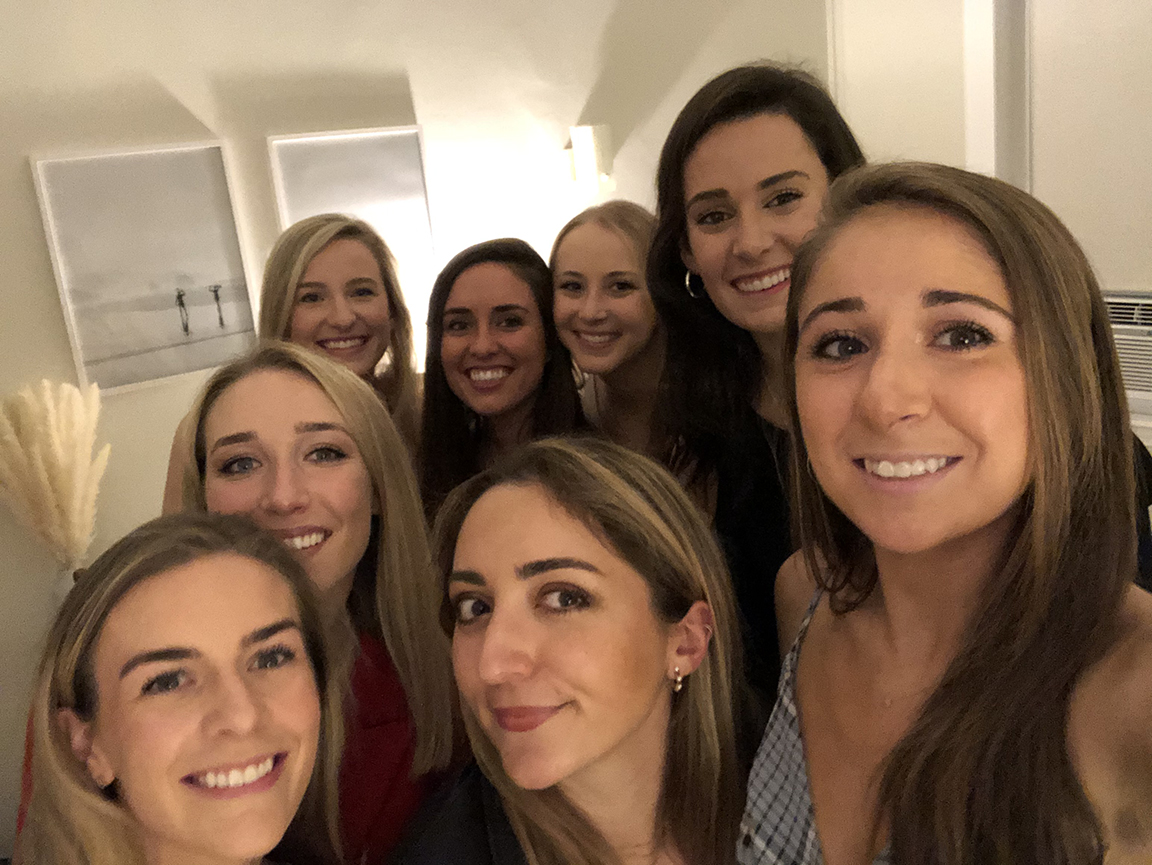
Courtney Ruggeri with friends

I love BC Law because of the friends I’ve met and the memories we’ve made—both inside and outside the classroom. -Courtney Ruggeri ’21

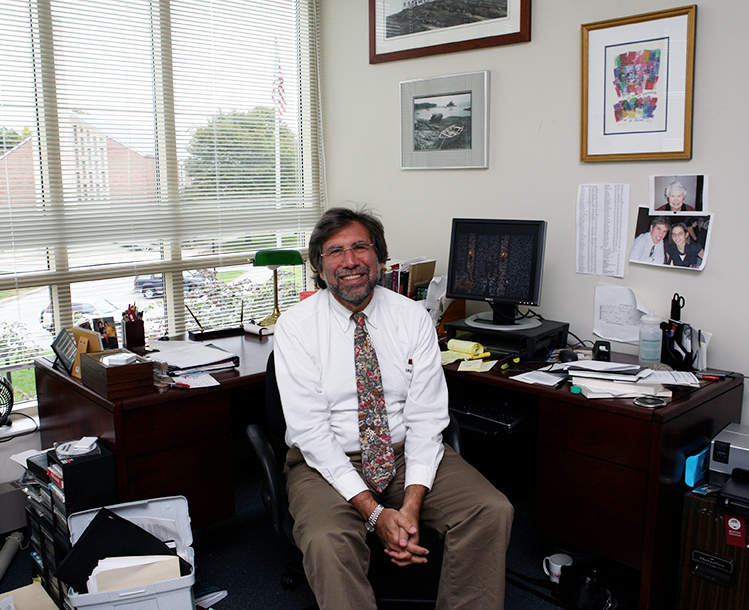
Magazine editor Vicki Sanders

I love BC Law Magazine. Stories about our wonderful students, faculty, alumni and community—what’s not to love? -Vicki Sanders

LLM students

I love to see LLM students from all over the world, becoming friends thanks to BC Law! -Susan Simone Kang
Pictured: Fangzheng Li and Jiaying Chen, China, Cristina Ullrich, Germany, Milena Cuadra, Costa Rica, Ankita Rath, India and Nadia Bouquet, France.

My favorite thing about BC Law is studying on the fourth floor of the library. It is very sunny and gets me through the long hours of assigned reading. -Ross Budryk ’22

What I love most about BC Law is how pretty campus is in the winter. Coming from Miami, I still get excited when I see the snow! -Stephen Millan ’22

BC has a special place in my heart since I am a Double Eagle. Spending so many years here has given me a heightened appreciation for the Law School and the community. -Jessica Loiacono ’22

I love my Criminal Law class this semester. It is entertaining and suits my interests well. -Charles Enberg ’22

I love Legal Grounds coffee shop. Stopping by for a soda, coffee, or snack is the perfect midday pick-me-up. -Maxwell Black ’22

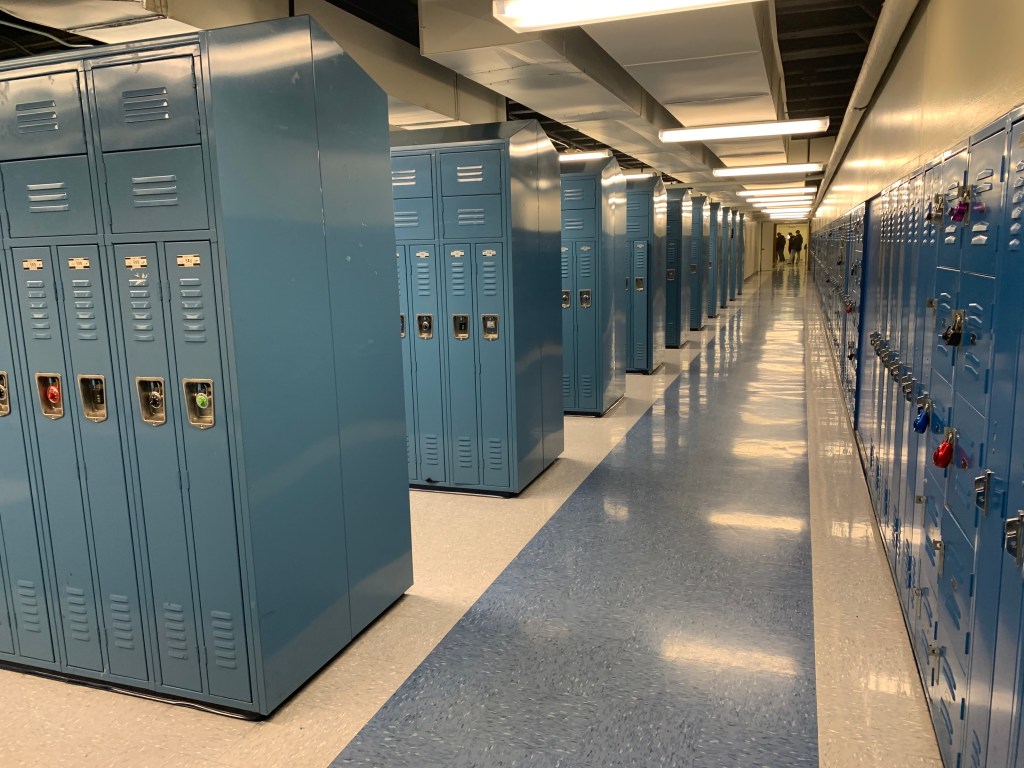
This is a little odd, but one of the things I love most about BC Law is the lockers in the basement. After class everyone heads to the lockers to switch out their books and we all chat about class and life. -Devon Sanders ’22

Weirdly enough, my favorite thing about BC Law is the East Wing. Last semester our section had all of our classes there, so now it just feels like home! – Rekha Korlipara ’22

I love the architecture of campus. BC Law is truly the Hogwarts of law schools! – Athanasia Kouskoulas ‘22

The friendships I have made is are what I love most about BC Law. —Becky Powell ’22

My favorite thing about BC Law is that professors are always friendly and welcoming – my favorite is seeing Professor Bloom roam around on the 4th floor of the library, stopping by our tables to say hi! -Selin Altintas ’22

Law Admissions Team after releasing 300 decisions #loveBCLaw #IamBCLaw #guesswholovesyoumore #watchout2023

I love that BC Law has given me the opportunity to live abroad and make even more new friends in my 3L year. The Dublin Semester in Practice has allowed me to immerse myself in a new culture while doing a deep dive into Irish immigration law. I could not think of a better way to finish the best three years! -Audrey McQuade (Pictured in the photo (in Dublin!) from left to right: Audrey McQuade, 2020 Nicole Chelkowski, 2021 Madeleine Gearan, 2020)

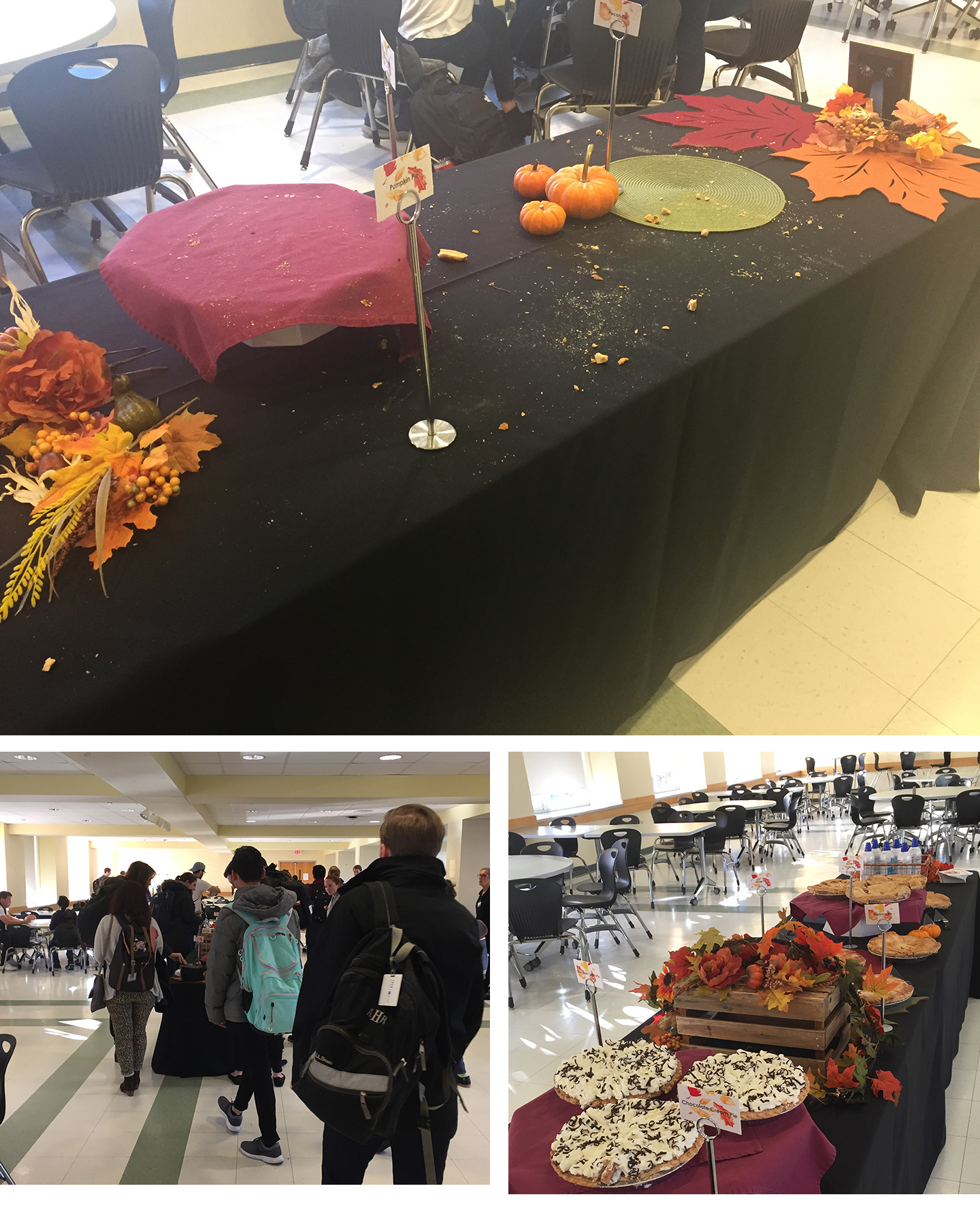
I love that the students enjoyed Harvest Desserts, aka Pie Day! – Theresa Kachmar

I’m sure I’m not alone in loving Dorothy Commons in our Career Services Office! -Heather Hayes

What I love about BC Law: one of my favorite people in the world, Pat Parlon! -Dean Rougeau