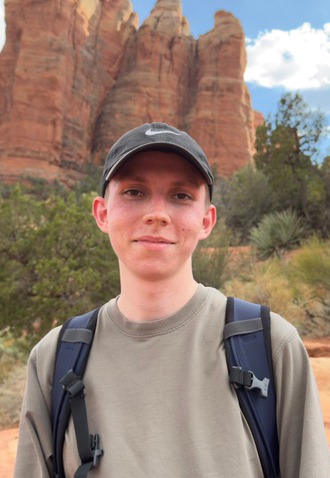
An Immersive Experience: Meet LLM Alum Tobias Wilcken Jørgensen ’25

There are numerous roads to law school, and no one-size fits all path to a successful legal career. Follow along with our series highlighting BC Law students and how they got here! 

Previous entries: Sara Womble (Winston Salem, NC); Elias Massion (Nashville, TN); Samina Gagné (London); Alvin Synarong (Murfreesboro, Tennessee); Ruchita Jain (Edina, Minnesota); Nicole Bauer (Michigan); Carlos Robles-Cruz (Puerto Rico); Taha Din (Naperville, IL); Timothy St. Pierre (Brunswick, ME).


Name:
Tobias Wilcken Jørgensen

Home Country:
Denmark

Degree:
LLM, Class of 2025

Continue reading

How My Grandmother’s Escape from Persecution Helped Me Discover My Own Path

Ilovik, Croatia, is a sparsely developed island with a compact area of just five square miles. With only 60 permanent residents and a modest influx of expatriates each summer, Ilovik’s way of life is characterized by its isolation and limited resources. The idyllic beauty of the island belies the history and complex legal struggles of many of its inhabitants. I have spent most of my childhood summers visiting my Baba, Croatian for grandmother, in Ilovik. During these visits, as I listened to Baba’s poignant recollections of her time on and off the island, I discovered my calling to pursue a career in law.

Continue reading

Coercion will Fail, but Trade will Endure

This guest post by BC Law Professor Frank Garcia originally appeared in the Cambridge University Press blog.

The first year of Trump’s second term has been a chaotic one for trade, as for so much else. Before inauguration, the President had already threatened tariffs against Denmark to force a “sale” of Greenland. Within days of taking office, he began threatening or imposing illegal tariffs against Colombia, China, Mexico, Canada, all steel and aluminum exporters, the EU, and now virtually all nations that trade with us. Each of these blows is a stark reminder that we live in a time when economic coercion masquerades as trade policy. 

Continue reading

Interested in International Law? There’s an Org for You

Whether you’re a prospective or current law student, or simply intrigued by the evolving landscape of international law, the new and improved International Law Society at Boston College Law School provides a platform where interested students can engage in meaningful dialogue, learn from experts, and explore the vast possibilities within international law. We interviewed the founding members and current E-Board of the International Law Society to uncover the inspirations behind its formation, its core objectives, and the exciting array of activities and events it has in store.

Continue reading

Law School in Action: International Human Rights Practicum

Boston College Law School gives its students a wide range of classes to take that are taught by some of the best scholars in the field. Yet, while learning about the law in a classroom is crucial to becoming a successful attorney, nothing prepares you for day-to-day practice more than getting hands-on experience before graduating. That’s where BC Law’s clinics come in.

Law students in their second and third years of study can apply for coveted spots in any of the school’s fifteen clinics. No matter what someone’s legal interest is, there’s a clinic for them! To help students better understand the opportunities available to them, the BC Law Impact Blog is highlighting each of these clinics this semester. Here is our interview with the director of the International Human Rights Practicum, Daniela Urosa.

Tell us about your clinic!

The International Human Rights (IHR) Practicum is focused on appellate submissions and legal reports that are sent to international, regional, and foreign courts, and other bodies that address global human rights issues, in cases chosen with strategic litigation and social justice criteria. This Practicum introduces students to the international human rights protection systems, particularly the Inter-American System of Human Rights (IASHR), which is the regional system for protecting human rights in all the independent states of the Americas that are members of the Organization of American States (OAS), including the United States. The Practicum also provides students with deep practical experience in human rights advocacy.

Continue reading

Dispatches from Dubai: Attending the COP28 UN Climate Conference

Note: this is the first of a two-part guest post series from BC Law 3L Edwin Ward.


Day 0: 12/6/23

On December 6, after taking my criminal procedure final, I prepared to fly halfway across the world to the United Arab Emirates on a mission to save the planet. 

Maybe I should back up. I am one of the two BC Law students who were chosen to represent Boston College at the 28th Conference of the Parties of the United Nations Framework Convention on Climate Change (UNFCCC)—more commonly known as the UN Climate Conference, or simply COP28. 

This annual conference is a meeting of all the nations of the world to reach consensus on the fight against climate change. The most famous of these conferences, COP21, delivered the groundbreaking Paris Agreement. This year’s COP is the first global stock take to assess our progress on meeting the goals of the Paris Agreement. COP28 is also notable for being hosted by the United Arab Emirates, a fossil fuel state that has presented more roadblocks than solutions in the fight to phase out fossil fuels.

Continue reading

The Beauty of an American Legal Education: An International Student’s Perspective

In the heart of Hong Kong’s Central district, under the watchful gaze of towering skyscrapers and amidst the city’s bustle, stands Lady Justice. Wearing a blindfold and delicately balancing scales in her hand, she acts as a beacon, symbolizing the enduring principles of fairness, equity, and the rule of law. She also represents Hong Kong’s British past, a colonial relic amidst ever-evolving cityscape and sovereignty that envelops her. As I left Hong Kong for Boston to attend law school, I thought of her journey, albeit stilted, through centuries of urban growth, shifts in sovereignty, and natural decay. With the statue of Lady Justice etched in my mind, I began my own legal journey in the United States.

So, as a Hong Konger, why attend law school in the United States? There are plenty of other common law jurisdictions to attain a law degree. The United Kingdom. Canada. Australia. Even Hong Kong itself. For me, the answer lies not just in the pursuit of a degree, but in the distinct ethos and philosophy of American legal education.

Continue reading

Studying Law as an International Student

One of the most interesting parts of my time at law school so far has been the opportunity to meet students from a wide variety of backgrounds. Some have come straight from completing their undergraduate degree while others have spent a significant amount of time in the workplace before starting at BC Law. From class discussions, it’s clear to me that everyone brings these experiences with them to law school and it’s fascinating to see the way in which people’s different perspectives inform how they intend to practise law. 

As someone who isn’t from the U.S. originally, I think a lot about the ways in which my experience of growing up under a different legal system influences how I think about the law and the United States judicial system. For one thing, my ability to follow along in my constitutional law class this semester has definitely been hampered by my not knowing some of the foundational knowledge that students in the U.S. pick up either through osmosis or high school civics. 

For this week’s blog post, I sat down with three international students at BC to find out a bit more about their own experiences of studying as international students and what led to them studying at a U.S. law school.

Continue reading

Making an Impact: Working in the International Human Rights Practicum

Today I am hosting a guest post by BC Law student Marija Tesla about her experience in BC Law’s new International Human Rights Practicum.


I have taken many international law and human rights courses at BC Law, and have loved them all: International Law with Professor David Wirth; International Human Rights: The Law of War, War Crimes, and Genocide (or what is more commonly known as humanitarian law) with Professor Allen Ryan; Immigration Law and the Human Rights Interdisciplinary Seminar with Professor Daniel Kanstroom; International Legal Research with Professor Sherry Chen. I came to law school because this is my calling in life, and every experience I got here (after the slog of the very provincial 1L experience), further proved to me that this is what I was meant to do. 

All those courses were amazing, but what I have loved most of all is my experience in the International Human Rights Practicum with Professor Daniela Urosa. 

I loved working on the amicus brief that we submitted to the Inter-American Court of Human Rights (IACtHR) with Professor Urosa and my amicus partner, Nadia Bouquet, because I got to think about and analyze a technical area of international human rights law while having an opportunity to be creative and to think outside the box (I wrote an earlier post about our visit to the IACtHR; read it here). My aim in everything I do is to challenge the status quo and to focus on how the law can challenge systems of oppression and create societies in which every person can and does live a life of dignity. Human rights law is aspirational and sometimes it creates standards that are not at all lived on the ground by the people who are most marginalized in our societies. Yet, if those of us who dare to remain idealists in a world often run by realists stop aspiring and working towards creating a more just and equitable world, then where will we end up as a collective? What I love about human rights law is that it cares deeply about individual life while caring about the collective. In a world of great economic inequality, environmental and racial injustice, human rights law is not just necessary, it is a difference of not just life and death, but a difference of what it means to live and to be alive.

Continue reading

Miles Away & Worlds Apart

As everyone keeping up with the media lately will be aware, the current situation in India is dire. At the beginning of the pandemic, India was doing relatively well, with rising cases under control and recovery rates relatively stable. India was scheduled to send millions of doses of vaccines to countries in Africa, Asia, and Latin America. In fact, approximately ⅓ of the population in the world’s poorest countries was relying on India to deliver their vaccines.1 Now, India itself is in calamity, with over 300,000 cases being reported daily – and many experts believe this number is a significant undercount. There is a shortage of oxygen, ventilators, and hospital space, to the extent where parking lots are now being used as mass cremation sites.2 Reading this news and seeing these photos is, of course, troublesome to everyone. Watching all of this unfold as an Indian-American immigrant, though, has been especially taxing.

Continue reading