Note: this is the first of a two-part guest post series from BC Law 3L Edwin Ward.
Day 0: 12/6/23
On December 6, after taking my criminal procedure final, I prepared to fly halfway across the world to the United Arab Emirates on a mission to save the planet.
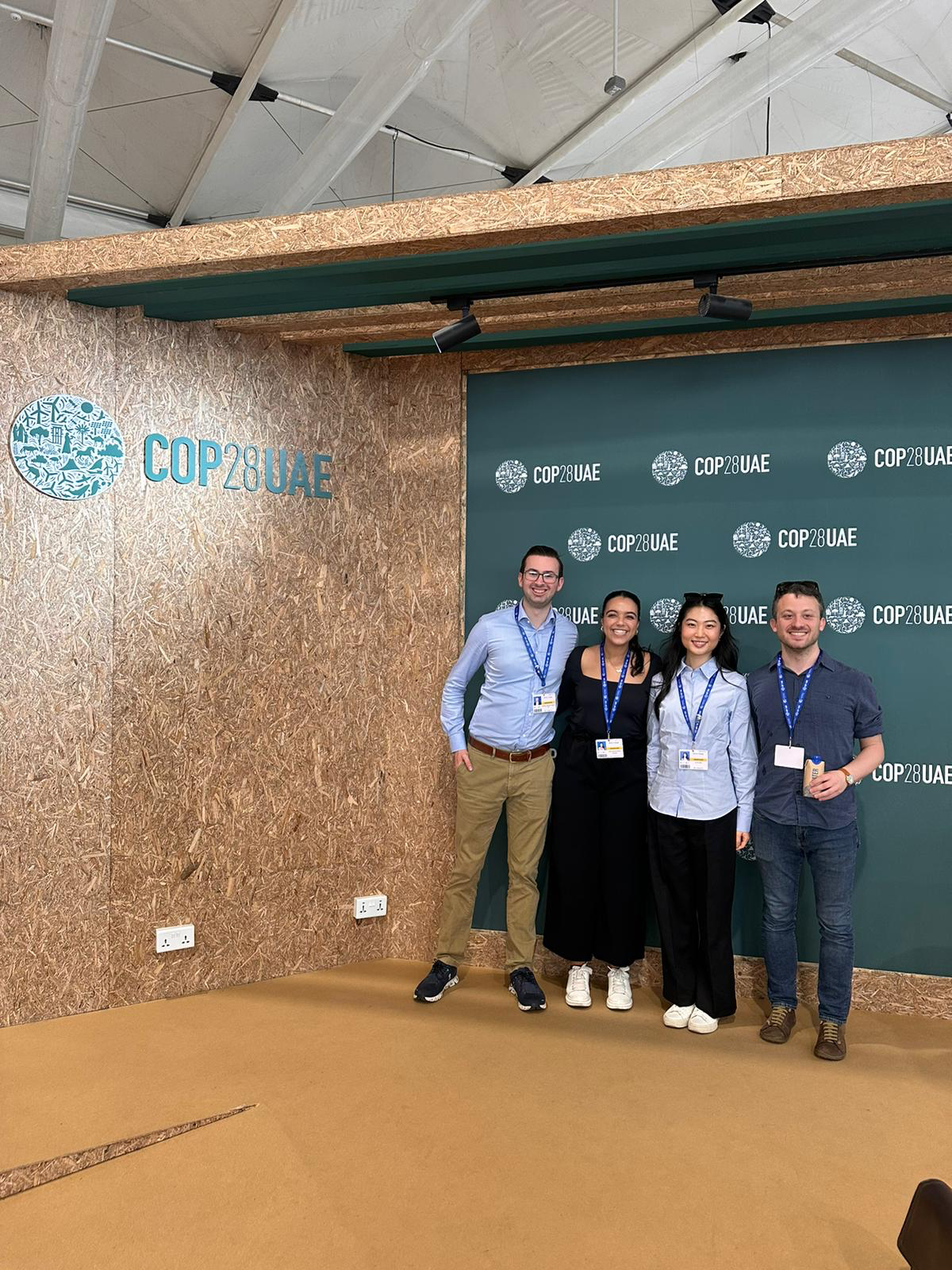
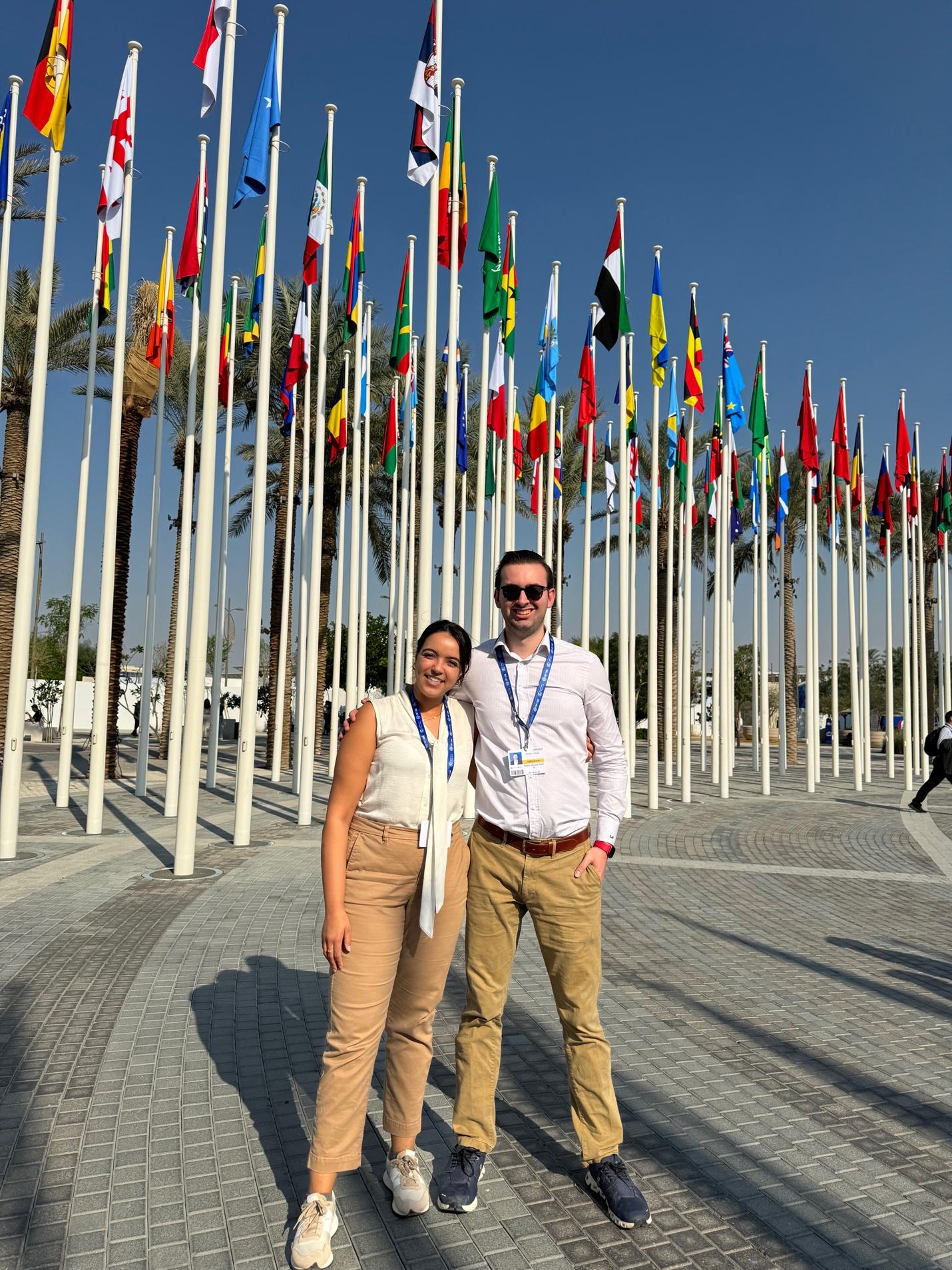
Maybe I should back up. I am one of the two BC Law students who were chosen to represent Boston College at the 28th Conference of the Parties of the United Nations Framework Convention on Climate Change (UNFCCC)—more commonly known as the UN Climate Conference, or simply COP28.
This annual conference is a meeting of all the nations of the world to reach consensus on the fight against climate change. The most famous of these conferences, COP21, delivered the groundbreaking Paris Agreement. This year’s COP is the first global stock take to assess our progress on meeting the goals of the Paris Agreement. COP28 is also notable for being hosted by the United Arab Emirates, a fossil fuel state that has presented more roadblocks than solutions in the fight to phase out fossil fuels.
Thanks to the efforts of BC Law Professor David Wirth and others at BC, this is the third year that Boston College has been granted observer status by the United Nations, meaning our delegation has near full access to negotiations and national delegation staff. I’m delighted to share my experience over my week as daily dispatches from Dubai.
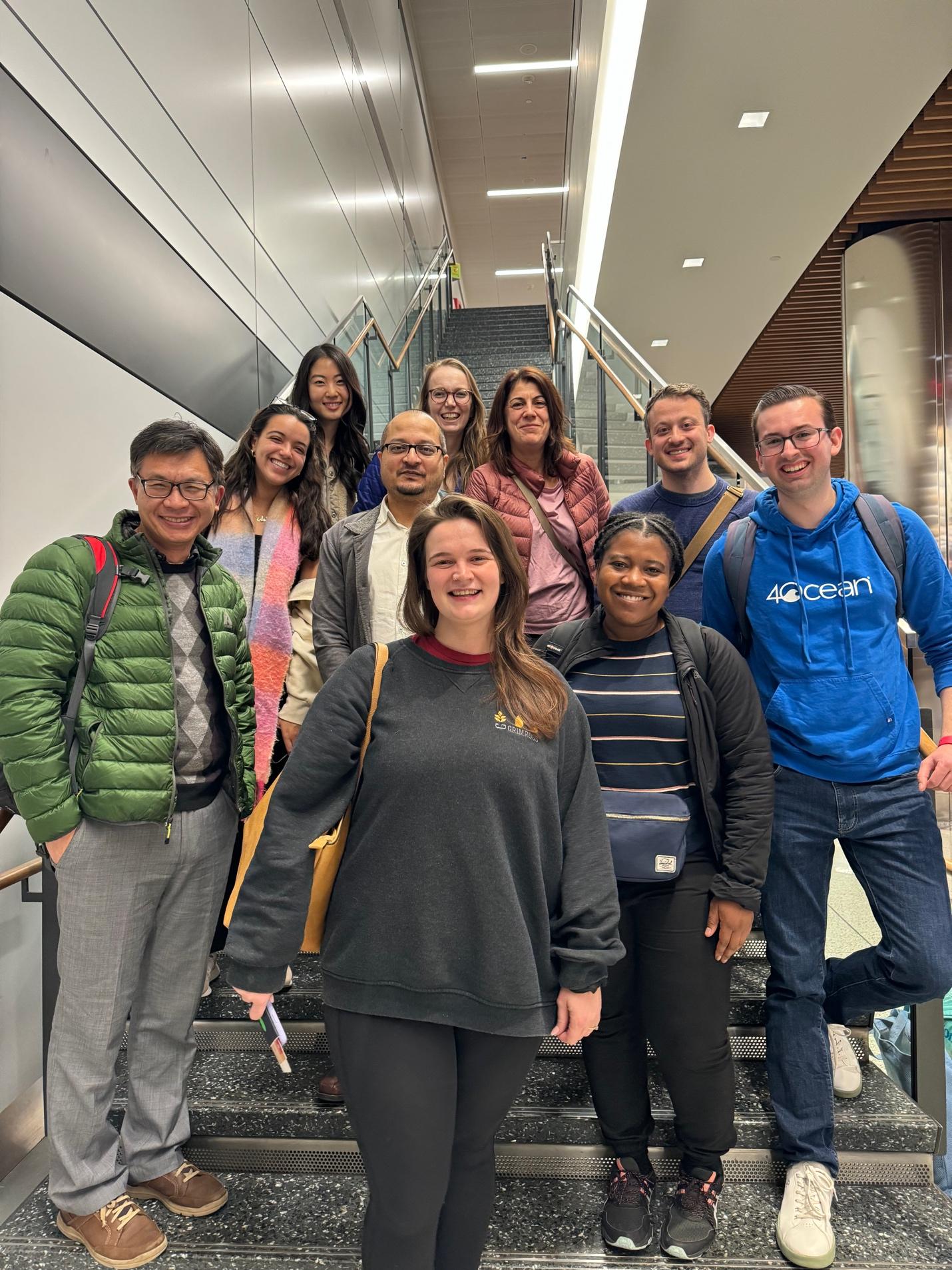
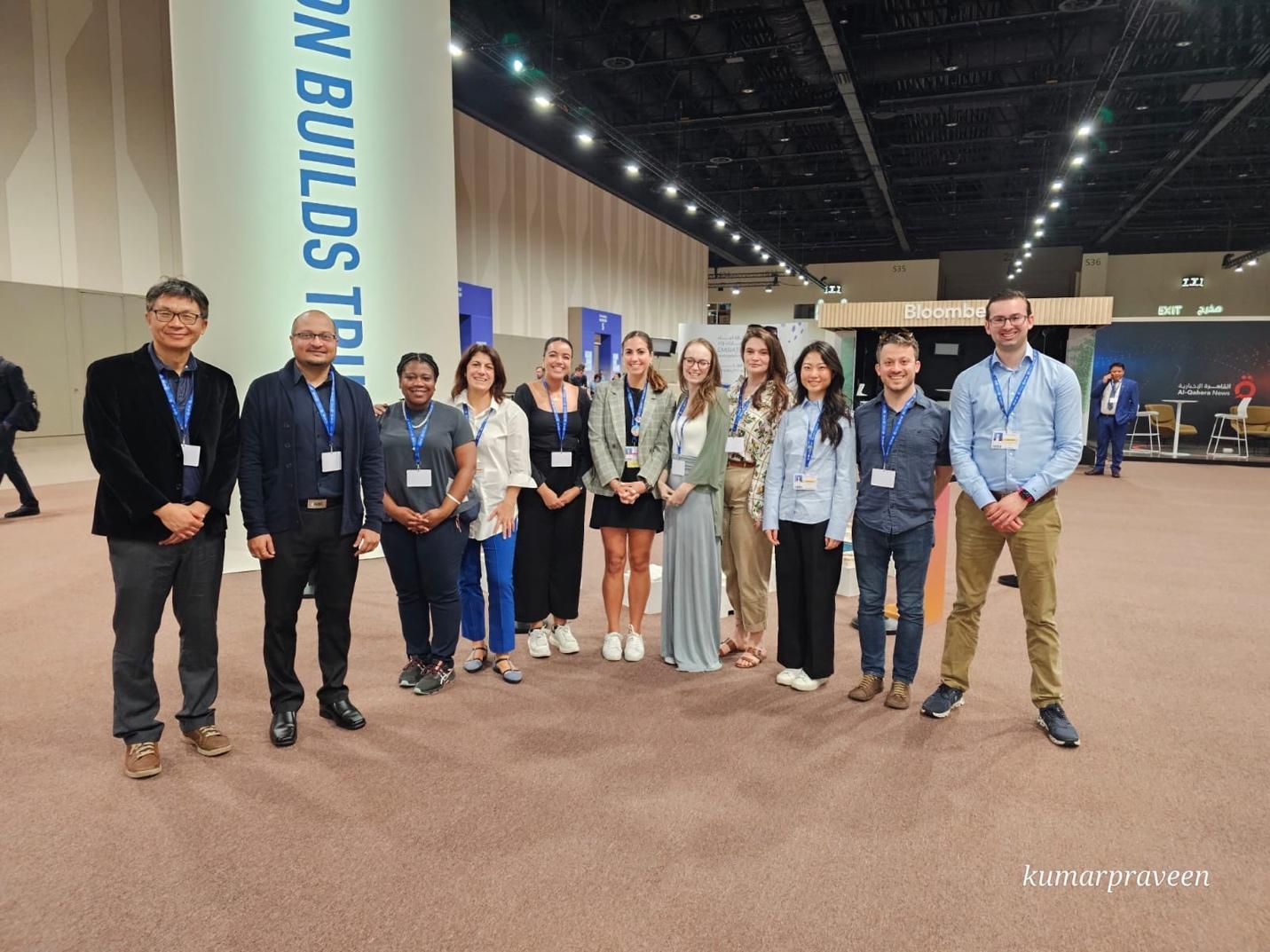
BC’s week one delegation consisted primarily of undergraduate students who returned from Dubai today. I met the rest of my week 2 delegation at Logan Airport. The ten of us represented a cross-section of the Boston College community, including an English PhD Candidate, a nurse practitioner grad student, a theology grad student, a sociology professor, an economics professor, and of course, Leila Ismaio and I representing the law school.
Day 1: 12/7/23
Thanks to the 12.5-hour flight and 9-hour time change, December 7th was confusingly a lost day. By the time we arrived at our hotel, it was already nearly 9 pm. We made sure to get some rest and got up bright and early for COP28 the next day.
Day 2: 12/8/23
We arrived at Dubai’s Expo City by 8 am to receive our UN badges. COP28 consists of two separated areas: the Blue Zone and the Green Zone. The Green Zone is open to the general public and consists of exhibitions by civil society and businesses. The Blue Zone is the secure, UN-controlled area, where only official delegates are permitted to enter. This is where negotiations happen. Our observer status permitted us nearly unfettered access to the Blue Zone, with only a small number of closed-door meetings off limits to us. We began right away with our first meeting with representatives from Estonia.
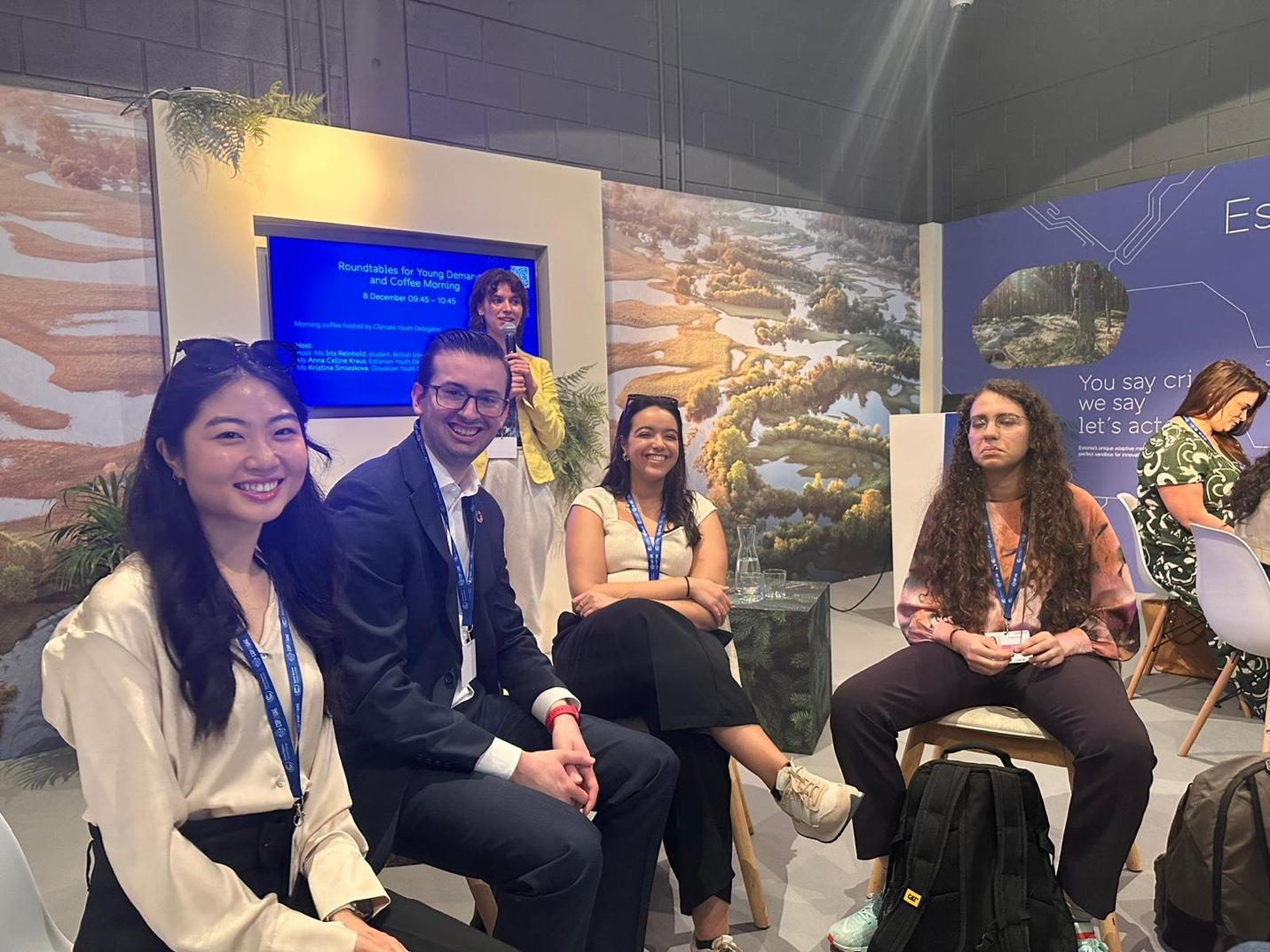
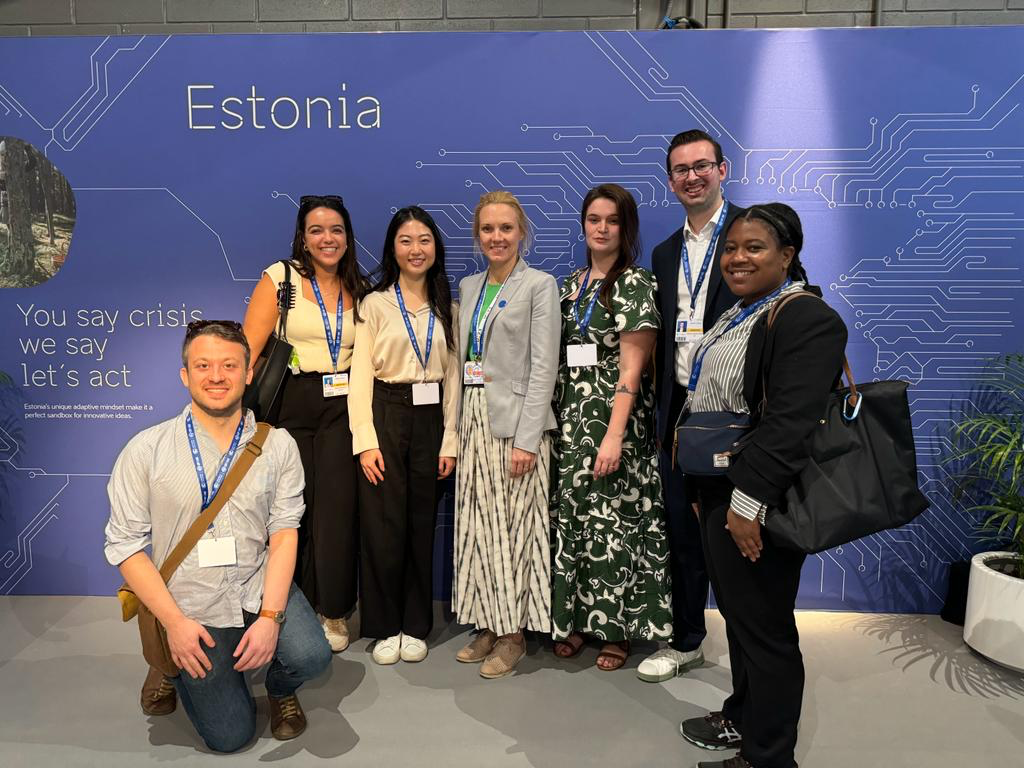
Estonia’s youth roundtable allowed us to meet young delegates from around the world and collaborate in drafting a list of youth demands for COP28, which the Government of Estonia agreed to present on our behalf. We capped off the roundtable with a meeting with Kristi Klaas, the Deputy Secretary General for Green Transition for the Government of Estonia, and got to share our American perspective on the issue of climate education.
Next, our team split up, with some faculty members attending a meeting with Dr. Maria Neira, the Director of Public Health for the World Health Organization, and most students attending a panel to learn how the UN is empowering women to take an active role in the energy transition.
I went solo to hear from Marisa Lago, Under Secretary of Commerce for International Trade for the Biden Administration, about how the adoption of stringent building codes in the developing world can greatly increase safety and efficiency in buildings. More than 50% of the buildings that will be on earth in the year 2050 have not yet been built, so it’s crucial that these future constructions meet the highest standards for efficiency and decarbonization. It was exciting getting to meet with Under Secretary Lago and learn how the US can push forward these standards through trade policy.
Our group reconvened for a final panel of the day with NGOs to learn about forced displacement as a result of climate change and how civil society and governments must address the looming crisis.
We spent over nine hours in Expo City for our first day of COP28!
Day 3: 12/9/23
On Saturday, we began by meeting Catherine Goldberg, a BC alum and Senior Climate Policy Advisor for the State Department and the US delegation. It was enlightening to ask questions directly about the US strategy, and gain greater insight into the politics of trying to reach global consensus on an international climate agreement. It’s strange to think about in the context of domestic climate policy, but on the international stage the United States is a relative leader pushing for a phase down of fossil fuels by 2030 and a phaseout of unabated fossil fuels by 2050.
“Unabated” is a term of art that requires abatement (also known as carbon capture) for any remaining fossil fuel use. OPEC countries, led by Saudi Arabia and the UAE have firmly opposed any language targeting fossil fuels—a curiosity considering that fossil fuels are far and away the largest source of greenhouse gas emissions. The European Union is far and away the leader at COP pushing for the strongest rules, but it was reassuring to hear that the Biden Administration is also on the forefront of calling for cutbacks on fossil fuels. In domestic climate policy, many in Congress argue that US action is meaningless when the rest of the world continues to drill and refine fossil fuels. So should the COP28 final agreement include language phasing out fossil fuels, it could provide the Biden Administration necessary leverage to build onto our national climate law, the Inflation Reduction Act.
After our meeting with the US delegation, we attended a panel of business leaders discussing the roadmap of unleashing the green energy potential in the Middle East, North, and Sub-Saharan Africa. It was an eye-opening panel because the business perspective contained challenges we hadn’t even thought about—like how developing countries often aren’t granted loans for more than seventeen years but a thirty-year loan is often necessary for these countries to be able to afford new renewable energy infrastructure. In some ways, this event felt like more of a PR move by certain panelists, like for the CEO of GE Vernova Middle East, who brought an entourage of photographers with her as she extolled the climate benefits of new natural gas power plants. It should be noted that the IPCC reports the construction of any new fossil fuel infrastructure, including natural gas plants, to be incompatible with a future with warming below 2ºC.
Next, a small group of us visited the Sustainability Pavilion in the Green Zone, a kid-friendly “Disneyfied” experience that teaches visitors about the climate impacts of overconsumption and consumerism on our ocean and our forests. It was an impressive pavilion designed to spread climate literacy with all generations in an exciting and compelling way.
We finished our Saturday at COP28 with a high-level panel on artificial intelligence for climate action, hosted by the UNFCCC, where we heard from government leaders like White House National Climate Advisor Ali Zaidi and the head of AI for Microsoft in the region. Artificial intelligence is a beast of its own, but the technology can be used for everything from optimizing the efficiency of the electricity grid to predicting the damage potential of climate-induced natural disasters.
Day 4: 12/10/23
On Sunday, we started with a meeting of the RINGOs, or Research and Independent Non-Governmental Organizations (the Boston College delegation is a member). We heard first-hand from those who made it into the few closed-door meetings about specific issues of contention arising before the release of the COP28 draft agreement. One of these issues was the mechanism for accounting for emissions trading between nations as a way to incentivize actions above and beyond the requirements of the Paris Agreement. This meeting allowed students to directly ask questions of delegates and share experiences and tips with each other.
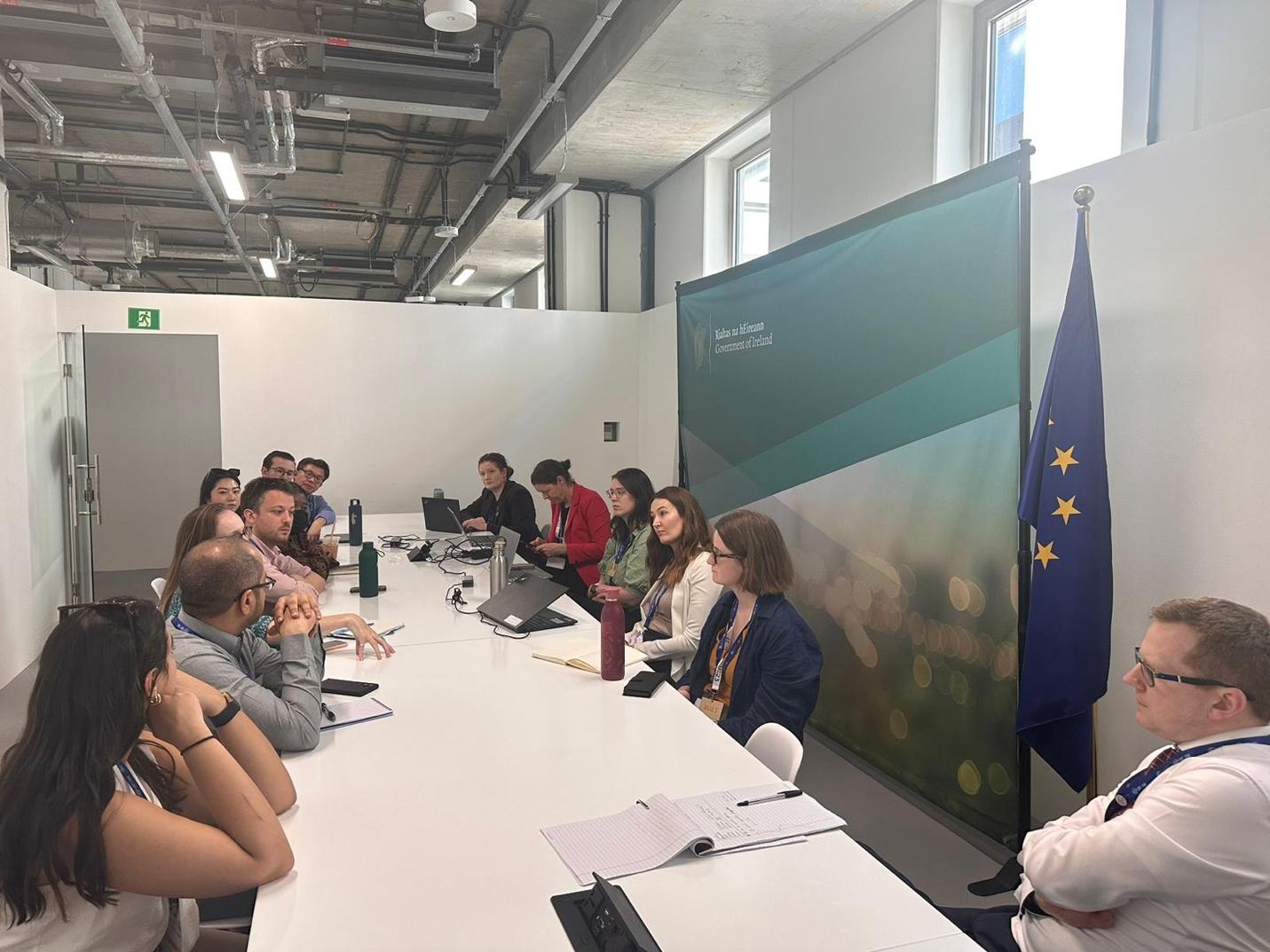
We continued our day with a meeting with Eamon Ryan, Minister for Transport and the Environment for Ireland, and the entirety of the Irish national delegation, to learn about their work pushing climate policy both within the European Union and at COP28. Ireland punches far above its weight at COP, and their team of policy experts and attorneys were incredibly generous in their candor and willingness to share their firsthand experiences so far and predictions about what comes next on global climate policy.
Our team soon split up, with groups fanning out to various meetings, including one analyzing anticipatory humanitarian action and intersection vulnerabilities. I explored the Women’s Pavilion, which included informal discussions and exhibitions about the necessity of empowering women to be leaders in the fight for equality and a greener future.
Note: Part two of Edwin Ward’s Dispatches from Dubai will post later this week!


Pingback: Dispatches from Dubai Part Two: Attending COP28 | BC Law: Impact