A Chance to Thrive: #BCLawImpact

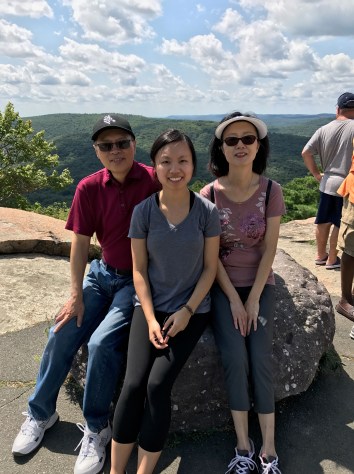
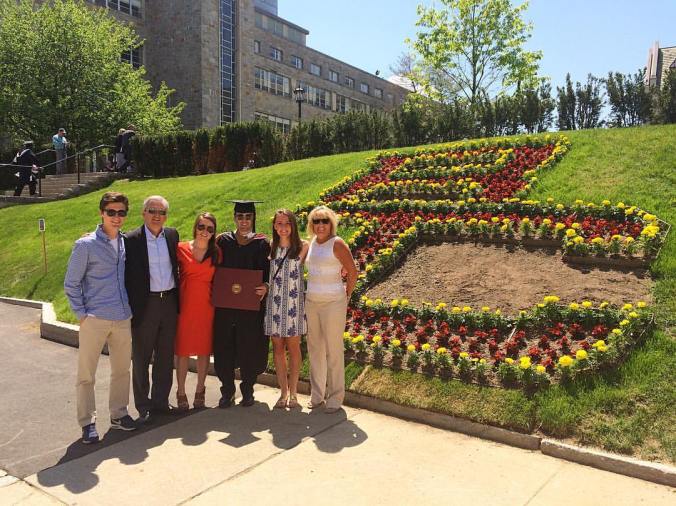
Though I knew I wanted to go to law school since I was relatively young, by the time I graduated college I had let my doubts get to me. I became anxious about the competitiveness, the time commitment, and the amount of debt law school would bring, and convinced myself that I couldn’t handle it. Even after getting into my top choice school, I considered trying out a different career path instead. Thankfully my parents convinced me to give it a shot. They tirelessly encouraged me that I could handle the challenge, that I was meant to do this, and that I shouldn’t give up on my dream. They knew that I would thrive here and they never let me forget it. I just want to take this chance to thank them, because I’m so incredibly glad I made the decision to attend.

13268546_10154202355799105_7957155805726537561_o.jpg

Thanks Mom and Dad: #BCLawImpact

My path to law school was, in some ways, untraditional. During college, I had seemingly clear plans and defined ideas about my future, yet none of them included a career as a lawyer. I applied to law school somewhat impulsively; I acted on a gut feeling. I remember making a frantic phone call to my mom the week of graduation to tell her that I no longer had any idea what my next steps would be. Naturally, this revelation came as somewhat of a shock to my parents, but they supported me without question as I worked to figure it all out.

So thanks, Mom and Dad. Without your understanding, law school, and most importantly BC Law, would not be a reality.

Thanks, Mom: #BCLawImpact

My mother has provided me with unwavering support that has proven to be vital for me to maximize my potential. Throughout my life, she constantly made sacrifices in order to create new opportunities for my personal, educational and emotional development. Whether it was listening to me vent about the stress-inducing issue of the week or pushing me to take that extra class to see if I like it, there is no doubt that my pedagogical progression would have fallen short of law school (and, likely much shorter) without this remarkable human in my life.

Continue reading

My Brother Nick: #BCLawImpact

From coaches who trained me so I can now lift heavy books, to enthusiastic professors and my supportive parents, I have many people to thank for encouraging my journey to law school. I am blessed to have known people from all walks of life and have chosen this path to give back to those that have inspired me along the way. Specifically I would like to thank my older brother Nick for being my role model and teaching me the value of following my passions. He has always been there to push me, compete with me and give me honest advice. My brother has been my mainstay while I jumped the track from my athletic pursuit to this peculiar and unfamiliar legal education. After all, he understands the transition exactly. I certainly could not have made it this far without him.

#BCLawImpact

My Sister Sarah: A #BCLawImpact Story

Not long after graduating from college my sister, Sarah, who recently entered her 30s, found herself at a convent in Port-au-Prince, Haiti, helping the nuns run an orphanage. She wasn’t taking vows, but she was beginning, unbeknownst to her, a life path focused on service to others. She has spent the bulk of the past five years working for the Human Resources department for Doctors Without Borders (Medicins Sans Frontiers, MSF).

When I think of HR, I think of Toby from the show The Office. That was not my sister’s HR. She spent months working in Kurdistan, the Democratic Republic of Congo, South Sudan, and Haiti again, to name a few. These are not vacation destinations, and that’s in part what drew her to the work: the ability to go into Afghanistan to work with and learn from a culture that most folks will never get to experience. Her HR department is likely unlike those that you have worked with. One of her first assignments was to maintain a list of every employee’s location for MSF’s entire 120-person mission in South Sudan, in case they needed to evacuate the country. Every day, she would email or call to each field hospital to see who was moving where, so that if disaster struck and the entire team needed to leave the country quickly, they could. She was barely twenty-four.

This week, the Impact blog is showcasing those people in our lives who have made an impact on us, who have helped us arrive at where we are today, and who keep us motivated towards our goals in the future. If you want to share a story about that person in your life, join us on Twitter, Facebook, or Instagram, and post your story using the hashtag #BCLawImpact. Students from the Law Students Association (LSA) and the blog will be in the Yellow Room on Thursday at lunch with a BC Law backdrop and a dry-erase board so you can take a picture with a message thanking someone who has made an impact on you and post it. We will post some of our favorite pictures and messages on the blog, and they will be collected in a Tagboard.

Continue reading

Que esta passant aqui?

Walking the streets of Barcelona with my father used to involve a mild amount of embarrassment. In the city, where he was born and raised, and where most residents speak both Catalan and Spanish, there is a social convention: If you speak to someone you don’t know in Catalan, and they respond in Spanish, you should follow their cue and switch to Spanish because they do not speak Catalan.  When someone responded to my father’s Catalan in Spanish, he persisted in Catalan.  Sometimes they would call him out, explicitly telling him that they did not speak Catalan.  Sometimes he would respond, “But we are in Catalunya.”  I would stand by, hand blocking my face, hoping the interaction would end quickly.  After seeing the national police bludgeon citizens throughout Catalonia with truncheons in a feeble attempt to block the October 1 independence referendum, I have a harder time seeing my father’s obstinacy as embarrassing.

Continue reading

BC Law: The Happiest Place on Earth?

When I first heard BC Law called “the Disneyland of law schools” during my 1L orientation, I was surprised. How can a law school – something that is grueling and competitive by nature—be likened to the widely proclaimed “happiest place on earth?” My only experience with law school was limited to the crazed mumblings of relatives in legal professions and of friends struggling through their own intensely cutthroat law school experiences. Before classes began I had been preparing myself to be swallowed by a writing-intensive version of the Hunger Games. “Keep your head on a swivel” was the sage warning from my dad as I set off on my new venture.

But I also found the Disney analogy comforting and personally appropriate. I recently retired from three years touring as a professional figure skater for Disney on Ice, where I had been actually living in this Disney dreamland. Disney was something familiar. I wanted to know more.

Continue reading

A Not-So-Typical Path to Law School

I have been grappling with the sometimes-tenuous relationship between my expectations and reality since I was a six-year-old girl, kissing my perfectly healthy mother goodbye before school. When I got off the school bus that afternoon, I expected my mother to be waiting for me at the bus stop, a snack to be on the table, and my father to be at work. Instead, it was my father waiting for me, no snack, and the news that my mother had taken a nap that morning and had never woken up.

Several years after my mother’s death, I was diagnosed with Major Depressive Disorder, but I think emptiness is a much more complete way to describe what was happening inside my head. When people think of depression they think of sadness and tears, but depression is more like a parasite that sucks away all human emotions; happiness, anger, even sadness cannot exist as long as depression is present. Being depressed is like being locked behind a one-way mirror; isolated, invisible to your loved ones, and forced to watch them live their happy lives without you.

Continue reading

“How Is That NOT Hearsay?” and Other Ways to Think Like a Lawyer

There are few things cooler for an 11-year-old kid than getting to stay up later than your siblings to watch an R-rated movie, so I vividly remember hopping on the couch with my dad to watch Crimson Tide in 1995. I clung to a pillow with wide-eyed excitement as the USS ALABAMA and a Russian submarine fired torpedoes at each other while Denzel Washington and Gene Hackman squared off with a nuclear war on the line.

At the movie’s tense climax, my dad, a Navy veteran, turned to me dead serious and said, “That guy’s wearing the wrong collar devices.”

My first reaction was “stop talking during the movie so I can see if the submarine sinks,” but my next thought was “how can he possibly know that?” I didn’t appreciate it at the time, but my dad’s time in the Navy had left him with attention to detail that he couldn’t turn off.  It was impossible for him to watch the movie without critiquing the uniforms, lingo, and behavior of the sailors after it had been so ingrained in him by his supervisors and experience.

That’s what 1L does to BC Law students.

Continue reading

My Personal Statement: An Introduction

The personal statement section of the law school application can sometimes seem like an artificial reconstruction of particular stories in a person’s life that is carefully molded solely to convince administrators that they should choose one individual over the thousands of other people they evaluate. And, for some, the statement turns out to be exactly that. Yet, the process of writing my personal statement forced me to re-evaluate my pedagogical journey in attempting to justify to myself why I was going to law school and what I could possibly do afterwards. Thus, I can think of no better introduction to who I am for the readers of BC Law: Impact than the personal statement that put me on this path.


I see each person as an accumulation of his or her experiences. More specifically, they are a representation of the events, cultures, opinions, ideas and ideologies that shaped who they are and inform their perspective. This perspective, in turn, shapes how they see the world, and how they understand their responsibility to other people.

Now, what is my perspective? I was born in San Juan, Puerto Rico to parents of Spanish and Cuban ancestry. My maternal grandmother was raised in San Juan by her grandfather, Jose de Diego, an active voice of the Puerto Rican independence movement in the late nineteenth century. As an independentista, he fought for sovereignty and the equal rights of Puerto Ricans under colonial rule. My grandmother was a firsthand witness of his struggle for equality, as the status of our island was debated and its future decided. Although neither of my parents were able to attend college, they worked long hours to start a cargo business from the ground up. Consequently, my grandmother took care of me during much of my early years and I have vivid memories of coming home to sit on her lap and listen to stories of de Diego’s battle for the people of Puerto Rico.

Continue reading