If You’re Reading This You Should Commit to Boston College Law School

Editor’s Note: Nirav Bhatt is the incoming President of the Boston College Law Students Association. Much like his predecessor, Nirav embodies the very best qualities that BC Law students have to offer. As his classmate, LSA colleague, and intramural basketball teammate, I can personally attest to the ways he pushes those around him to better both themselves and the BC community as a whole. In keeping with the Drake theme of this post’s title, he is and has been Steph Curry with the shot in all conceivable situations. Without further ado or musical references, I am very pleased to present… 

If You’re Reading This You Should Commit to Boston College Law School

by Nirav Bhatt, President, Boston College Law Students Association 2015-16

Continue reading

Black Lives Don’t Matter

They don’t. That’s the message that plays on a loop against a seemingly never-ending backdrop of killings of unarmed minorities at the hands of those who are sworn to serve and protect society. That’s the message that’s forced a movement around the idea that #BlackLivesMatter. That’s the message that made me wake up in a sweat early this morning.

Silhouettes

The only light came from the eerie glow of the crescent moon as I stood in the middle of a wheat field. It was slightly windy, and there was a dilapidated farmhouse about 100 yards in front of me. Around the field and the house were dark, uninviting woods. For no reason, I noticed I was wearing a white t-shirt and black pants. As I walked towards the house, I suddenly realized there were figures approaching me on either side from out of the wooded areas. They were just black silhouettes lit against this breezy field, but I could tell they were wondering what I was doing there, and I, of course, would have no explanation. Continue reading

A Letter to the Class of 2018 from the President of BC’s LSA

Editor’s Note: One of my very favorite parts of attending BC Law is the constant interaction with classmates who push you to be better. They motivate you to set goals that would have seemed unthinkable on the first day of 1L year, and inspire you to exceed even those heightened aspirations. Although she would never admit it herself, Lainey Sullivan is the living, breathing embodiment of this type of BC student. I reached out to Lainey and asked if she had the time to write a brief welcome letter to next year’s incoming students, and what she sent back blew me away. Per usual. Without further ado, I am very pleased to present…

Why I Will Miss BC Law and Why You Shouldn’t Miss the Chance to Be an Eagle

By Lainey Sullivan, President, Boston College Law Students Association

Continue reading

Watch My Academic Advisor, Ray Madoff, Testify Before Congress on Repeal of Estate Tax

Watch Ray Madoff, my academic advisor and favorite Boston College Law School professor testify in Washington, D.C. before the Congressional Ways and Means Committee on the issue of repealing the nearly century-old Estate Tax. Although Congress is seriously considering the repeal, according to Madoff it would be a mistake, with far-reaching societal costs and negative repercussions.

Professor Madoff testifies in the video below at 10:52, 25:05 and 38:56, and she absolutely “kills it.” ‪#‎IAmBCLaw‬ ‪#‎ProudToBeALegalEagle‬ ‪#‎TrustsAndEstates‬‪ #‎TaxIsSexierThanYouThink‬

http://lawmagazine.bc.edu/2015/03/no-time-to-repeal-estate-tax-fairness-dictates-it-remains-says-madoff/

Things I Wish I Knew, Vol. 6: The Car (or No Car) Chronicles (Part 2)

Happy April, everyone! This is a continuation of last week’s post (check it out here!) on the question I get most frequently from students about what it’s like having (or not having) a car in Boston.

While I do have a car, I find that (whenever possible) it’s much more convenient to take public transportation. So much like last week, I’ll tell you what my experience has been in not using a car to get around.

PROS OF NOT HAVING A CAR

– You will never have to dig out your car or worry about parkingEnough said. 

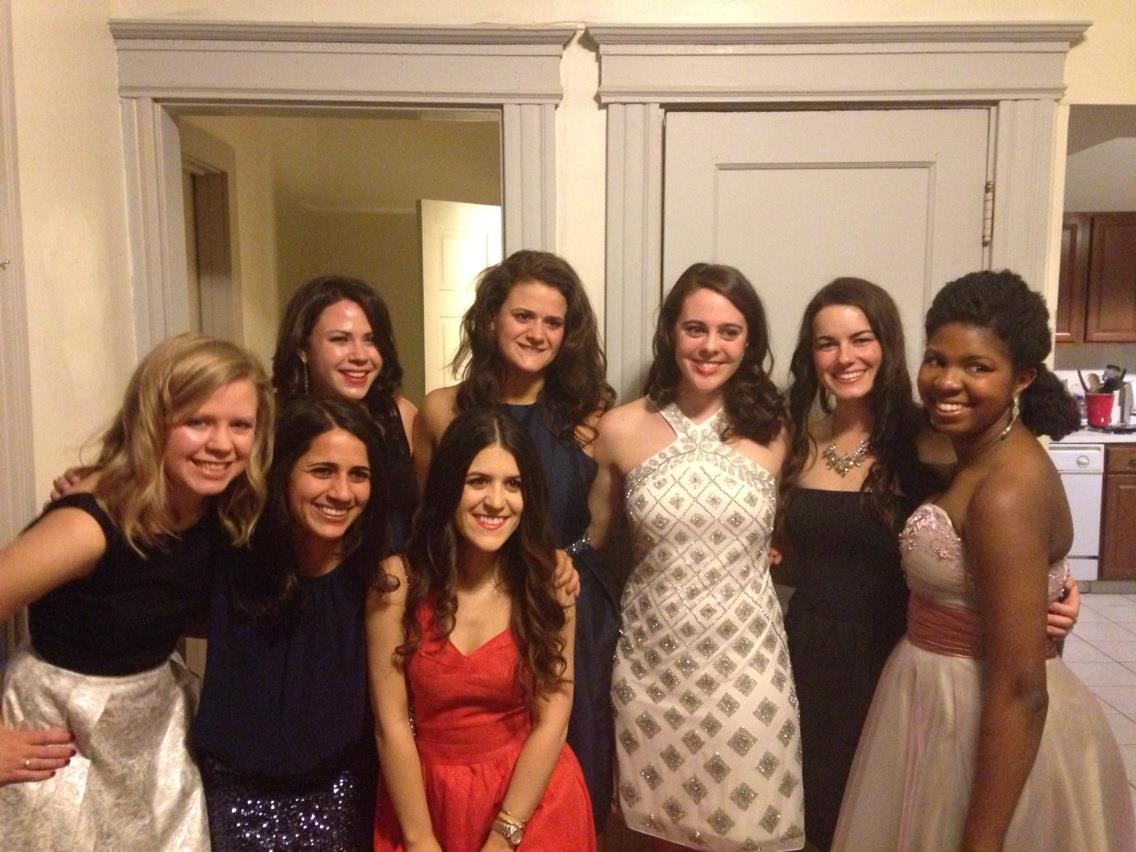
Me and my ladies getting ready for Law Prom right before we took an Uber there.

Me and my ladies getting ready for Law Prom right before we took an Uber there.

– Going out is much easierLaw school is about having fun too, and not having a car or having to drive means you don’t have to worry about getting home safely from things like Law Prom.

– You’ll develop a knowledge of the MBTA that your friends will both fear and loveIt’s amazing to me how many students with cars don’t know how to get around without them. You will be their guide and guru, showing them the wonders of a whole new world.

– No car means no gas moneyOr car payments. Or insurance payments. Which means more money in your pocket to spend on things you actually enjoy.

– You learn to budget your time betterI have friends who live in Back Bay who get more done on their commute than I get done all day. Plus, because they don’t have a car, they’re always conscious of getting places on time. They know how to make their time count because they know that the ride home will either be a long one, or a generous offer from a friend.

Continue reading

BC Law Life: The Public Interest Law Foundation Auction (or, How to Get Paid for Doing Public Interest Work)

DSC_0026

BC students and faculty bid on items at the annual Public Interest Law Foundation Auction on March 27, 2015.

As someone who knew they wanted to do public interest work, one of my biggest concerns coming into law school was how I was going to fund my summers. Public interest summer internships almost never pay, and particularly if you’re looking to work outside of Boston, the prospect of having no income and potentially paying two rents can be really daunting.

Thankfully, for students at BC Law, there’s an on-campus solution: getting funding from the Public Interest Law Foundation (or PILF). Continue reading

Adversaries (Paradigms of Criminal Law Part 2)

prosecution and defense 2

Judith Mizner describes her argument before the Supreme Court. She and her client won, assuring that police cannot search your smartphone without a warrant even if you are arrested.

“A person is not the worst thing they have ever done,” said Judith Mizner, the Chief of the Appeals Unit in the Federal Public Defenders Office.

Another defense attorney jumped in. “Exactly! Prosecutors don’t see past a defendant’s crime. They don’t see who they are as a human being.” Some first year students shifted uncomfortably; others enjoyed the sincerity of the lawyers sitting in front of us.

“But defense attorneys have the luxury of caring only about their clients,” a prosecutor quipped back.

“We have to think about what is right for the defendant, for the victims, and for the rest of the community. I do think about the defendant’s life and who they are when I am deciding between plea bargains and charges, but I also have to face the victims,” she said. Continue reading

Things I Wish I Knew, Vol. 5: The Car (or No Car) Chronicles (Part 1)

Happy Monday and welcome to this week’s edition of TIWIK! This is the first part of my two part post on the question I get asked most often by prospective students: “Should I bring my car?”

Real talk: driving in Boston is less than ideal. But the thing no one told me was that having a car in Boston is a zero-sum game. Everyone wins and loses on this point, whether you have a car or not. Either way, you will survive, and I can promise you that you will find a way to be both happy and grouchy about it.

My mom and I on our road trip to Boston with my entire life in the backseat

My mom and me on our road trip to Boston with my entire life in the backseat

I brought my car because I drove to Boston from Florida with all my worldly possessions stuffed in the trunk. But for all the prospective students out there who have a choice to make come this fall, here’s my experience:

Continue reading

Find Your Firm: 1L Boot Camp Meet the Employers Night

As I’ve written about before on this blog, 1L Boot Camp is an awesome program run by the LSA and Career Services to help first-year students make themselves as marketable as possible during their respective job hunts. This Tuesday’s Meet the Employers Night is in many ways the crown jewel of that program. After months of presentations about best practices for résumé formatting, interview attire, and networking strategy (to name a few topics), Boot Camp culminates with this unique chance for the 1Ls to put everything they’ve learned to use.

What exactly is Meet the Employers Night? Basically, exactly what it sounds like. Representatives from fifty-one (51!) government entities, public interest organizations, businesses, and law firms set up shop in the Law Library and talk with the 1Ls about what they do, who they’re looking for, and what their hiring processes are like. Which organizations will be in attendance? Here is the full list: Continue reading

The Big Decision: How to Pick the Law School That is Best For You

Selecting where you are going to spend the next three years of your life (at least) is a stressful and important decision. I remember when I was trying to decide which school I would attend I kept going back to three factors: the quality of the school, the financial situation I would be in, and the geographic location of the school. I think for most people the ultimate decision comes down to some combination of these factors. 

For everyone who is thinking about where to attend law school, do your research before you make your decision. When you make the decision to attend law school you do so with one real goal: employment. So make an effort to look into the employment statistics of every school you’ve been accepted to. When I was looking at BC’s I realized that the employment rate was much stronger than comparable schools, and even some higher ranked schools that I had been accepted into. It’s also important to look at what types of jobs students go into. Are they large firms, or public interest? Look at whether most students end up in positions that are in-line with your ultimate goals or vastly different. You’ll be able to gain some perspective by comparing three or more schools. Also pay attention to which cities students end up working in. I visited one school in Virginia which touted it’s connections to DC, but actually ended up placing more people in southern states. If you really want to get into it, you can also look at state bar statistics, and see which schools have more students take the bar in the state you’d ultimately work in. This may be an indicator of how regionally connected a particular school is, and whether or not there will be a strong alumni network in the region. Also, make sure that the bar passage rate is respectable for the schools you consider, as you’d be shocked at the rates at some lower ranked schools. Bar passage rates will also tell you something about the quality of classmates you’ll find at different institutions.

Continue reading