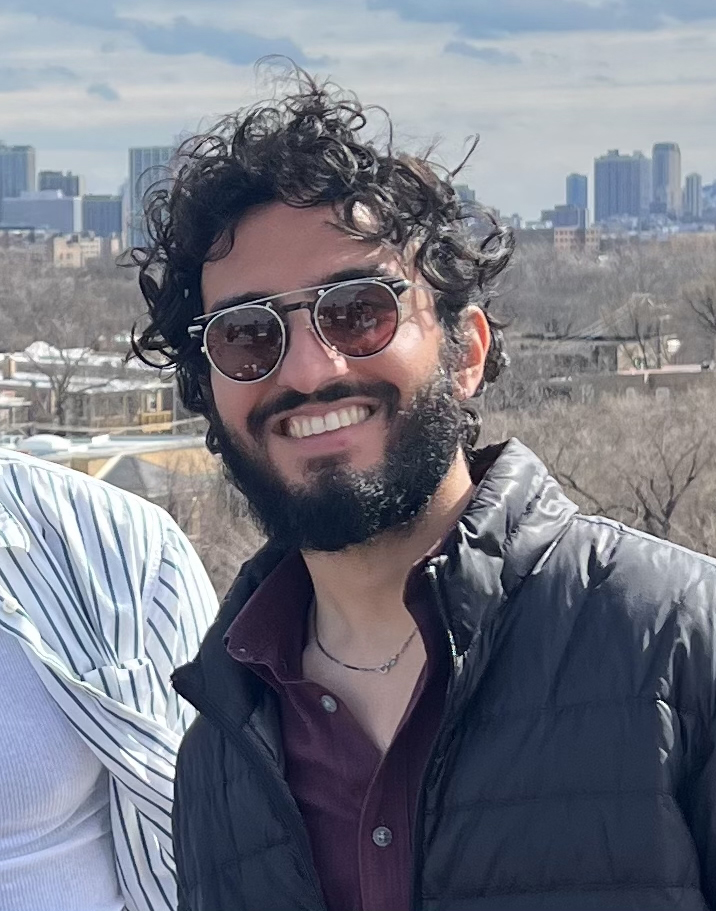
Finding Creative Solutions to Human Problems: Meet Taha Din

There are numerous roads to law school, and no one-size fits all path to a successful legal career. Follow along with our series highlighting BC Law students and how they got here! 

Last year’s entries: Sara Womble (Winston Salem, NC); Elias Massion (Nashville, TN); Samina Gagné (London); Alvin Synarong (Murfreesboro, Tennessee); Ruchita Jain (Edina, Minnesota); Nicole Bauer (Michigan); Carlos Robles-Cruz (Puerto Rico).


Name: Taha Din

Hometown: Naperville, IL

Educational Background: I graduated from Loyola University Chicago in 2021, where I studied History, Classical Civilization, and Arabic Language.

Continue reading

From Law Faculty Support to Law Student: Meet Nicole Bauer

There are numerous roads to law school, and no one-size fits all path to a successful legal career. Follow along with our series highlighting BC Law students and how they got here! 

Our first five entries were with Sara Womble, from Winston Salem, NC, Elias Massion, who comes from Nashville, TN and the University of North Carolina at Chapel Hill, Samina Gagné from London and Columbia University, Alvin Synarong from Murfreesboro, Tennessee and Princeton, and Ruchita Jain from Edina, Minnesota and Boston University.


Name: Nicole Bauer

Hometown: Sebewaing, Michigan 

Educational Background: B.A. Political Science, Minors in History and in Human Rights, Stanford University

Continue reading

Human Rights Field Trip: From BC to DC

“We of this Western Hemisphere, by movements such as that symbolized by this building, have taken great strides toward securing permanent peace among ourselves.” These were the words of Teddy Roosevelt dedicated to the Pan-American Union Building built in 1910. Only a few blocks from the White House, it now stands as the headquarters for the Organization of American States and was the setting for the BC Law Human Rights Elective and International Human Rights Practicum field trip in 2024.

The Pan American Union, a sort-of United Nations exclusively for the Americas, would transform into the Organization of American States in 1948. All 34 independent nations of the Americas hold membership within the organization and while it does not loom large in the American political imagination, it holds greater significance to Latin and Central American and Caribbean nations.

Continue reading

Law School in Action: International Human Rights Practicum

Boston College Law School gives its students a wide range of classes to take that are taught by some of the best scholars in the field. Yet, while learning about the law in a classroom is crucial to becoming a successful attorney, nothing prepares you for day-to-day practice more than getting hands-on experience before graduating. That’s where BC Law’s clinics come in.

Law students in their second and third years of study can apply for coveted spots in any of the school’s fifteen clinics. No matter what someone’s legal interest is, there’s a clinic for them! To help students better understand the opportunities available to them, the BC Law Impact Blog is highlighting each of these clinics this semester. Here is our interview with the director of the International Human Rights Practicum, Daniela Urosa.

Tell us about your clinic!

The International Human Rights (IHR) Practicum is focused on appellate submissions and legal reports that are sent to international, regional, and foreign courts, and other bodies that address global human rights issues, in cases chosen with strategic litigation and social justice criteria. This Practicum introduces students to the international human rights protection systems, particularly the Inter-American System of Human Rights (IASHR), which is the regional system for protecting human rights in all the independent states of the Americas that are members of the Organization of American States (OAS), including the United States. The Practicum also provides students with deep practical experience in human rights advocacy.

Continue reading

Speaking Up to Genocide: What About the Uyghurs?

All of us at BC Law Impact want to make it clear that the contents of this guest post is addressed to those who deny the very real genocide happening in Xinjiang, and is not meant to group together or target anyone because of their race. We recognize that anti-Asian racism is a very real and terrible thing, and we stand with all Asian members of our community in denouncing hate in all its forms.


By Danny Abrahim 

“There is no genocide.”

If you feel attacked by the words “genocide,” “human rights,” or “the Chinese government is committing an ethnic and cultural genocide against millions of Uyghurs and violating numerous international human rights laws in the process,” this blog post is not for you.

After BC Law’s student organizations MELSA, APALSA, HHRP, ILS, and the Boston College’s Center for Human Rights co-hosted a talk on the mass detention of Uyghurs in China’s predominantly Muslim city Xinjiang, three things became abundantly clear: one, that oppression abroad can reach college campuses within the United States; two, that state-sponsored violence occurring in other countries intersects with different practices of law and U.S. movements; and three, how powerful speaking up and listening can be.

Unfortunately, these lessons were not entirely contained in the speakers’ talks, but were demonstrated in part by the reaction some students had to the event.

Continue reading

Making an Impact: Working in the International Human Rights Practicum

Today I am hosting a guest post by BC Law student Marija Tesla about her experience in BC Law’s new International Human Rights Practicum.


I have taken many international law and human rights courses at BC Law, and have loved them all: International Law with Professor David Wirth; International Human Rights: The Law of War, War Crimes, and Genocide (or what is more commonly known as humanitarian law) with Professor Allen Ryan; Immigration Law and the Human Rights Interdisciplinary Seminar with Professor Daniel Kanstroom; International Legal Research with Professor Sherry Chen. I came to law school because this is my calling in life, and every experience I got here (after the slog of the very provincial 1L experience), further proved to me that this is what I was meant to do. 

All those courses were amazing, but what I have loved most of all is my experience in the International Human Rights Practicum with Professor Daniela Urosa. 

I loved working on the amicus brief that we submitted to the Inter-American Court of Human Rights (IACtHR) with Professor Urosa and my amicus partner, Nadia Bouquet, because I got to think about and analyze a technical area of international human rights law while having an opportunity to be creative and to think outside the box (I wrote an earlier post about our visit to the IACtHR; read it here). My aim in everything I do is to challenge the status quo and to focus on how the law can challenge systems of oppression and create societies in which every person can and does live a life of dignity. Human rights law is aspirational and sometimes it creates standards that are not at all lived on the ground by the people who are most marginalized in our societies. Yet, if those of us who dare to remain idealists in a world often run by realists stop aspiring and working towards creating a more just and equitable world, then where will we end up as a collective? What I love about human rights law is that it cares deeply about individual life while caring about the collective. In a world of great economic inequality, environmental and racial injustice, human rights law is not just necessary, it is a difference of not just life and death, but a difference of what it means to live and to be alive.

Continue reading