BC Law Life: The Public Interest Law Foundation Auction (or, How to Get Paid for Doing Public Interest Work)

DSC_0026

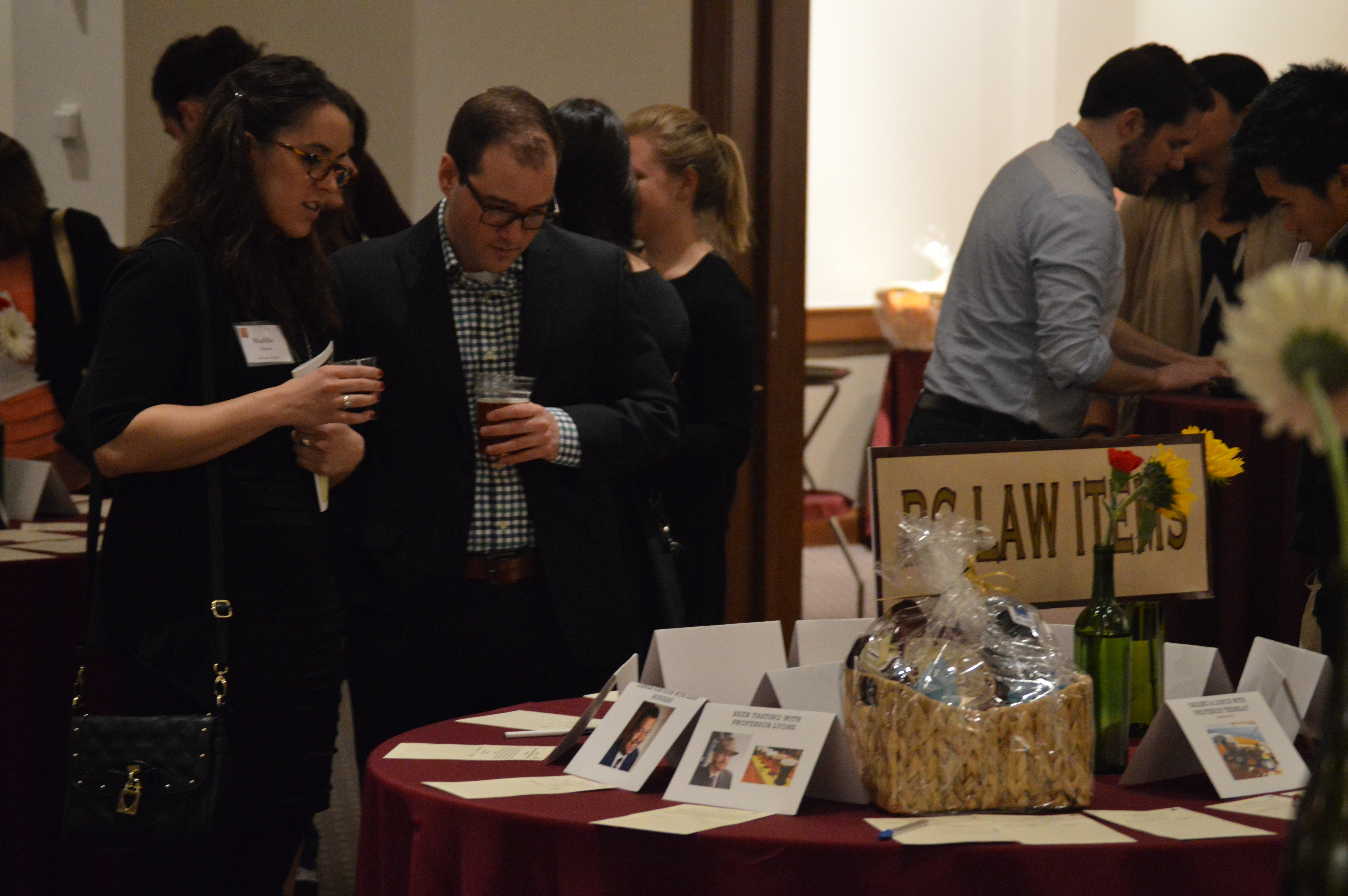
BC students and faculty bid on items at the annual Public Interest Law Foundation Auction on March 27, 2015.

As someone who knew they wanted to do public interest work, one of my biggest concerns coming into law school was how I was going to fund my summers. Public interest summer internships almost never pay, and particularly if you’re looking to work outside of Boston, the prospect of having no income and potentially paying two rents can be really daunting.

Thankfully, for students at BC Law, there’s an on-campus solution: getting funding from the Public Interest Law Foundation (or PILF). Continue reading

Last Week I Argued In U.S. District Court And It Was Great

Well hello, everyone! It’s been a while. Thanks to the record 108.6 inches of snow we’ve been allotted here in Boston (thanks Mother Nature), I’ve had a lot of catching up to do at work, and have also been very busy prepping to defend the SSA’s position in federal court.

Ron's Work Desk

A computer, coffee, and the Code of Federal Regulations. What more could I ask for?

Let me back up: This semester I’ve been working as a student in the Semester In Practice: Public Interest program at BC Law. Specifically, I’m an intern in the Social Security Administration’s Office of the General Counsel (let’s just call it OGC) in downtown Boston. Rather than balancing classes I’ve been writing briefs, negotiating, and prosecuting. Oh, and preparing to argue a brief in the U.S. District Court in Portland, Maine…

Continue reading

Tinker Bell or Prison Time? (Paradigms of Criminal Law Part One)

2015-02-21 17.17.10 copy

sujatha baliga, Restorative Justice Project and Associate Director, NCCD, speaking at the Rebellious Lawyering Conference at Yale Law School, Feb. 21, 2015 (photo taken by me)

“What do crime victims actually want?”

That is a question that sujatha baliga is asked quite frequently as a facilitator in restorative justice programs that focus on making a victim whole after a crime rather than punishing the person who committed the crime. “You can never really predict what will make a victim whole. Sometimes, it’s Tinker Bell,” balinga said. Continue reading

BC Law Magazine: John Kerry AND Amazing Law School Admissions Essays

For anyone thinking about law school, and BC in particular, the latest issue of the BC Law Magazine (http://lawmagazine.bc.edu/) is not to be missed. One of the things BC prides itself on is educating future lawyers who go out to serve their communities in a variety of ways. This issue of the magazine profiles a number of such leaders who got their start at BC Law, including of course Secretary of State John Kerry. As if that wasn’t enough, there are also a number of exceptional law school admissions essays reprinted which are great examples of the kind of succinct and compelling narratives which can grab a reader’s attention. Enjoy!

IMG_1398 Continue reading

Helplessness: Why this philosopher needs a law degree

Do you think the world is basically just? Do people get what they deserve most of the time? Provoked by an article in The Guardian entitled “Believing that Life is Fair Makes You a Terrible Person,” I discussed this question with one of my best law school friends on a ride home from school. Neither of us could square the idea of fairness with the world in front of us, and I think that is why we are both in law school.

The article discusses a theory– the just-world hypothesis– based on a number of studies. The theory suggests that people just can’t handle being helpless in the face of great injustice. So they find ways of imagining that the injustice is deserved. They imagine that this poor family is lazy, that black man was a criminal, or this woman was asking for it.  On the other hand, the same studies suggest that when terrible things happen and there is a concrete way to help, people tend to sympathize with the sufferer rather than blaming her.

Continue reading

Life at BC Law: Spring Break Service Trips

During my spring break 1L year I spent an amazing week in Miami with four of my classmates. When you hear spring break and Miami in the same sentence your mind might jump to Ultra or Miami Beach, but we were actually in Miami to spend the week working at VIDA (http://www.vidalaw.org), a legal assistance center which primarily aids immigrant women and families who have lived through domestic abuse.

My fellow volunteers pose after our everglades tour.

My fellow volunteers pose after our everglades tour.

Every spring BC Law send a number of 1L student groups to do volunteer legal work around the country. My 1L year students traveled to Arizona, Denver, New York, New Orleans, and Navajo Nation. These trips are a tradition at BC Law, and are completely student run, with 2L alumni of the trips assisting 1Ls to plan and fundraise.

Continue reading

How To Be A Lawyer While You’re Still in Law School

As future law students, I’m sure you’ve all heard the rumors and stereotypes about law schools. They run the gamut — from the terrifying and incorrect (“EVERYONE IS SO COMPETITIVE AND NO ONE IS FRIENDLY AND IT’S IMPOSSIBLE TO GET AN A YOUR FIRST YEAR”), to the hilariously accurate (“Law school is high school for adults”), to the tongue-in-cheek (see, for example, Thought Catalog’s take on the 19 People You Meet in Law School). But the stereotype that most stuck out to and worried me as a prospective student was what I’d like to call the Myth of the Library Lockdown. That is, by heading off to law school, you are essentially signing yourself up for three years of good ol’ book learning, tied to a library carrel, buried under 200 pounds of Supreme Court opinions and study aids.

Don’t get me wrong. As a former English major, I can get down with the heavy reading. Chaucer, Shakespeare, and I used to be great pals; I can handle my fair share of tiny print. But that’s not why I wanted to come to law school. I taught for three years after college, came to law school with a really specific focus, and knew I wanted to get right to making an impact in real people’s lives. I was really nervous that law school was going to feel like a fruitless and frustrating gesture, a means to an end I had to just get through in order to do the work I am passionate about. But that’s because I didn’t know about clinics.

Continue reading

Racial Justice, Law, and Doing More

Die In

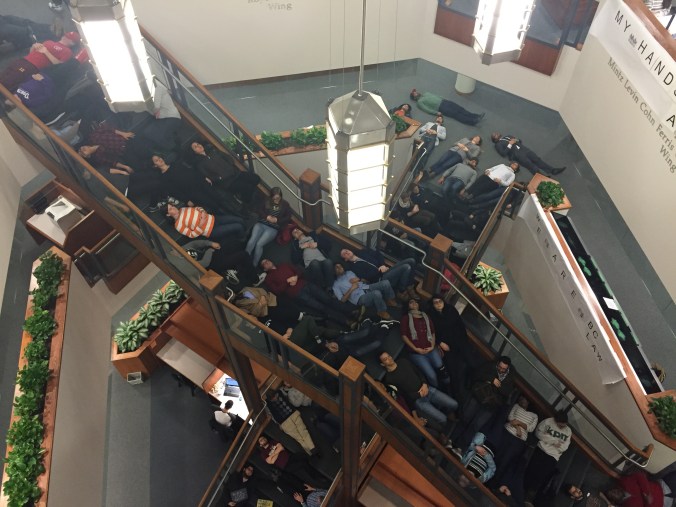
Photo of the student organized BLACK LIVES MATTER – A Demonstration of Solidarity @ BC Law Event. Photo by Laura Partamian

Her voice was quivering, but she was still shouting. That’s what I remember most about the young woman in front of me. I could almost feel the sting of disrespect as she described her face being shoved against a brick wall by a police officer. I couldn’t help but relate to her — a graduate student in her 20s, pulling off the hipster look much better than I can. The difference between us was that she is black and I am not. That difference meant that she had spent her life in fear of law enforcement, treated like a criminal when she wasn’t one.

Continue reading