Today’s guest post was written by 3L Joshua Little.
When people sign up for the military, they’re signing up for two major life changes. The first one is obvious: you’re joining the military and leaving everything behind. The second one is a later realization: you are leaving the military and leaving everything behind… again. Most advice you receive focuses on practical considerations, like finding a job or going back to school. Those matter, but they miss something deeper. Leaving the military is not just a career change. It is the loss of a community that shaped every part of your life.
For readers who have never been in the military, it is hard to fully grasp how all-encompassing that community is. Many people who join the military do not come from strong support systems. Some grow up with limited opportunities or guidance. Others may have support at home, but once they join, they are physically separated from it. The military takes young people, often 17 or 18 years old, and sends them across the country or across the world. Communication with home is limited, especially early on. Over time, the military becomes more than just a job. It becomes everything: your structure, your safety net, and your sense of belonging.
The military fills roles that, in civilian life, are spread across family, school, and community. It teaches basic life skills such as self-care, financial management, and professional behavior. It tells you where to live, who you will live with, and what your daily schedule looks like. Your coworkers are not just coworkers. You eat with them three times a day, you sleep next to them, you brush your teeth at the same sink, and most importantly, you rely on them in high-stress situations. Leadership is not just about work performance. It extends into personal development and even personal problems. If something goes wrong in your life, there is always someone to turn to. It creates a natural sense of camaraderie.
The military community is not just a support structure but often the only support structure.
That support is easy to take for granted while you are in it. It is only after leaving that many veterans realize how much they depended on it. Suddenly, the built-in network is gone. There is no longer an automatic group of people who understand what you are going through. No one is checking in on you in the same way. And no one is guiding your next steps.
It is not a secret that many veterans struggle after leaving the service. They experience higher rates of unemployment and mental health challenges, including suicide. These challenges, I think, reflect the abrupt loss of a deeply embedded community. Going from constant support to relative isolation is a difficult shift.
That is why, for me, finding the right environment after the military was not just important. It was essential. I found that environment at BC.
For readers unfamiliar with law school, it is not just an academic experience. It is also an intense, shared journey. You are placed into a section with the same group of students, and you take your core classes together. You see the same faces every day. You go through the same challenges at the same time. It creates a natural sense of camaraderie. Sound familiar?
Within 30 minutes of orientation, I had met someone who would become one of my closest friends. Within a month, I had an entire section of people I could rely on. There were several social events that served as opportunities to build relationships and feel connected.
Beyond the social side, BC also offers support systems that mirror some of the support provided by the military. CSO helps with resumes, interviews, and job searches. Student organizations provide mentorship and guidance. Student Services is there when life gets complicated.
In many ways, law school replaced pieces of the structure I had lost. That community made all the difference.
It gave me a sense of belonging at a time when I could have easily felt isolated. It provided guidance when I needed direction. It reminded me that I was not navigating this transition alone.
Because of that, I don’t just want to benefit from the community. I want to contribute to it and to give back in the same way people have supported me. My hope is that I have given to that community as much as it has given to me.
For veterans considering law school, this is something worth paying attention to. You are not just choosing a place to study. You are choosing a new community. And for law students who have never experienced the military, it is worth understanding that for many veterans, community is not just a bonus. It is our soul.
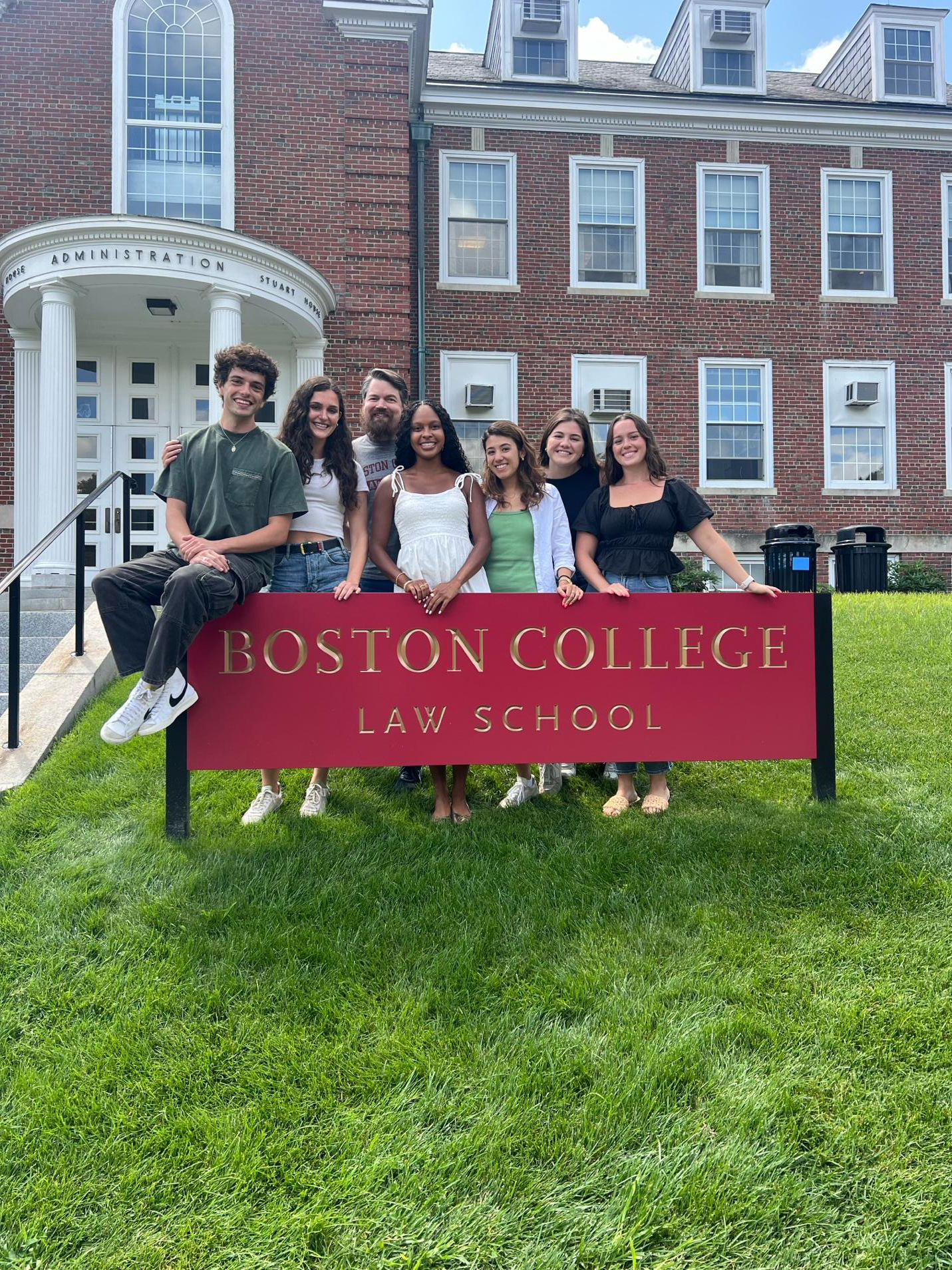
Joshua Little is a third-year student at BC Law and military veteran. You can reach him at littlejr@bc.edu.
 BC Law: Impact