This guest post was written by The Hon. David Mills ’67.
I am eighty-three years old today, and I was twenty-two in September of 1964 when I walked into my first class at Boston College Law School. The school was still in the old building across from Saint Ignatius Church. My first class was Real Property with Professor Richard G. Huber, a rite of passage for every first-year student. We entered nearly two hundred strong; by second year we were about one hundred twenty, and most of us made it through to the end.
To this day, I believe I could not have found finer professors or a better place to begin learning to love the rule of law. Frank Larkin was Associate Dean. Our Dean, Jesuit Robert F. Drinan, S.J.—often described as “peripatetic ”—was, in my experience, a very good man. Frank’s office sat down the hall on the second floor. His indispensable right hand was Charlie Pepper, who typed faster than anyone I have ever seen. Charlie came to know most of us simply by transcribing the hundreds, if not thousands, of letters Frank wrote to law firms, judges, and potential employers on behalf of BC Law graduates. We often joked that Charlie Pepper wore out more IBM Selectrics than any typist in modern history. Each letter was tailored to the student it concerned, and each contained Frank’s signature phrase: “fully mindful of the treachery of superlatives.” I adopted that phrase myself in the many letters of recommendation I later wrote for my law clerks, interns, and colleagues—letters typed by the generous and competent people who endured my dictation over the years in both public and private offices. When graduation approached in the spring of 1967, I cannot say that Frank and I had an immediate friendship. Yet he seemed to know every graduating student—our backgrounds, our interests, our hopes, and our intentions.
My memory of Frank Larkin, however, carries a deeply personal weight. In April 1967, my life collapsed under the force of a catastrophic loneliness crisis surrounding my sexuality. I was placed in a locked ward at Saint Elizabeth’s Hospital while my classmates moved on to the bar review (and exam), to their families, clerkships, jobs, hopes, and dreams. Dean Dan Coquillette once made me promise never to disclose that the faculty voted to award me my degree despite my inability to take final exams. I break that promise now only to illustrate how completely undone I was—broken in ways no one, including Frank Larkin, could have known.
By the following year, and with the support of the school and many classmates, I had reassembled enough of myself to sit for the bar exam and try to rejoin the path my classmates had taken. Paul G. Kirk released me from the SJC clerkship that he had offered, and the Navy JAG commission I had hoped for evaporated. I spent a month or two on welfare, bewildered about my future. Around that time, Hugh H. Bownes had just been appointed to the United States District Court in Concord, New Hampshire. He reached out to Boston-area law schools seeking a clerk with writing skills. I never saw the letter Frank sent to him, but I know what it contained: that familiar phrase, “fully mindful of the treachery of superlatives.” I am told that Dean Huber also contacted Judge Bownes on my behalf. These overtures were unsolicited and unknown. Whatever the combination, it began my lifelong friendship with Judge Bownes that endured until the day he died.
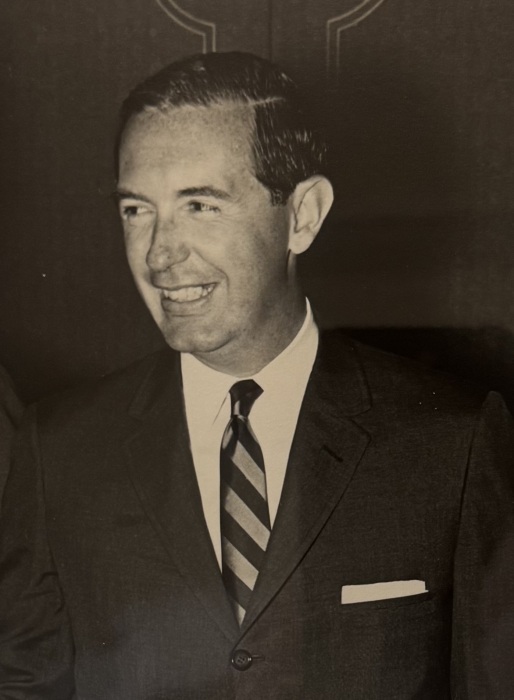
Frank’s influence did not end there. As my clerkship concluded in the summer of 1969, Frank “placed” me in the office of Middlesex District Attorney John J. Droney. That placement led to lifelong friendships with John and his wife Mary, with former Governor Foster Furcolo, and with Ruth Abrams—then John Irwin’s chief of appeals in Robert Quinn’s criminal division.
Those relationships became cherished, priceless threads in the fabric of my life. And there was more. When Ruth Abrams left Jack Irwin’s division to become the first Executive Secretary of the Superior Court—and later a Justice of the Superior Court and then the Supreme Judicial Court—Frank “placed” me in her former position, under the supervision of Jack Irwin and Robert Quinn. I often think of the song, “I get by with a little help from my friends.” In my case, I got much further than “by” and got more help than I could ever measure.
I write this on January 27, 2026, the day after a heavy snowstorm, reflecting on the sixty-year arc of my life in the law and the role Frank Larkin played in it. From those early placements, I went on to serve as an assistant to Frank Bellotti, then into a deeply satisfying twenty-year law partnership with Frank Teague and Ed Patten. From that partnership came Governor Swift’s nomination of me as the first—and still the only—openly gay appellate judge in Massachusetts. That chapter concluded with my mandatory retirement at age seventy, as required by our Commonwealth’s constitution. From there, I then spent five years on the State Ethics Commission by appointment of Governor Patrick, and I now serve on the Judicial Nominating Commission by appointment of Governor Healey.
I remain ever mindful that I was never worthy of Frank’s superlatives and his indefatigable support. But from the deepest part of myself, and until the moment of my passing, I will never cease to thank Frank Larkin for helping lift me from a locked ward at Saint Elizabeth’s into a life and career filled with challenge, opportunity, and joy. Through the years, I tried to stay in touch with him, in person and by telephone. In recent years, when I called, I sometimes had to remind him who I was, and I tried to express my gratitude. As time went on, he could not always remember. But he did remember Suzanne DelVecchio (née Vitagliano), Chuck Sullivan, George Higgins, Jerry Petruccelli and Mike Mone, and he would tell me he remembered me—perhaps out of his abundant kindness. Frank Larkin was, in truth, a kindness factory. I tried to reach him on January 19. I dialed each of the three numbers I had for him, without success. That same day, I called my classmate Jerry Petruccelli, hoping for a Boston College connection that might explain the silence. Jerry and I both feared the worst. Our search led us to his obituary. I was three days too late. And while I remain fully mindful of the treachery of superlatives, I can say without hesitation that no single person in my life has shown me more steadfast love and commitment. May this good man rest in peace.
The Hon. David Mills ’67 was Associate Justice on the MA Appeals Court from 2001-2012. Image below of Mills from Patch.com May 2023 feature story ‘Danvers Select Board Chair Shares Pride Flag’s Personal Significance To Him.’

 BC Law: Impact