Boston College Law School gives its students a wide range of classes to take that are taught by some of the best scholars in the field. Yet, while learning about the law in a classroom is crucial to becoming a successful attorney, nothing prepares you for day-to-day practice more than getting hands-on experience before graduating. That’s where BC Law’s clinics come in.
Law students in their second and third years of study can apply for coveted spots in any of the school’s fifteen clinics. No matter what someone’s legal interest is, there’s a clinic for them! To help students better understand the opportunities available to them, the BC Law Impact Blog is highlighting each of these clinics this semester. Here is our interview with the director of the International Human Rights Practicum, Daniela Urosa.
Tell us about your clinic!
The International Human Rights (IHR) Practicum is focused on appellate submissions and legal reports that are sent to international, regional, and foreign courts, and other bodies that address global human rights issues, in cases chosen with strategic litigation and social justice criteria. This Practicum introduces students to the international human rights protection systems, particularly the Inter-American System of Human Rights (IASHR), which is the regional system for protecting human rights in all the independent states of the Americas that are members of the Organization of American States (OAS), including the United States. The Practicum also provides students with deep practical experience in human rights advocacy.
What makes the IHR Practicum unique?
The IHR Practicum is the only experiential learning opportunity offered at BC Law that’s oriented to International Law, which is essential for an integral legal education in a globalized world. It’s also a unique clinic that provides academic engagement and partnered work at several levels: global, regional, local, and within the BC community.
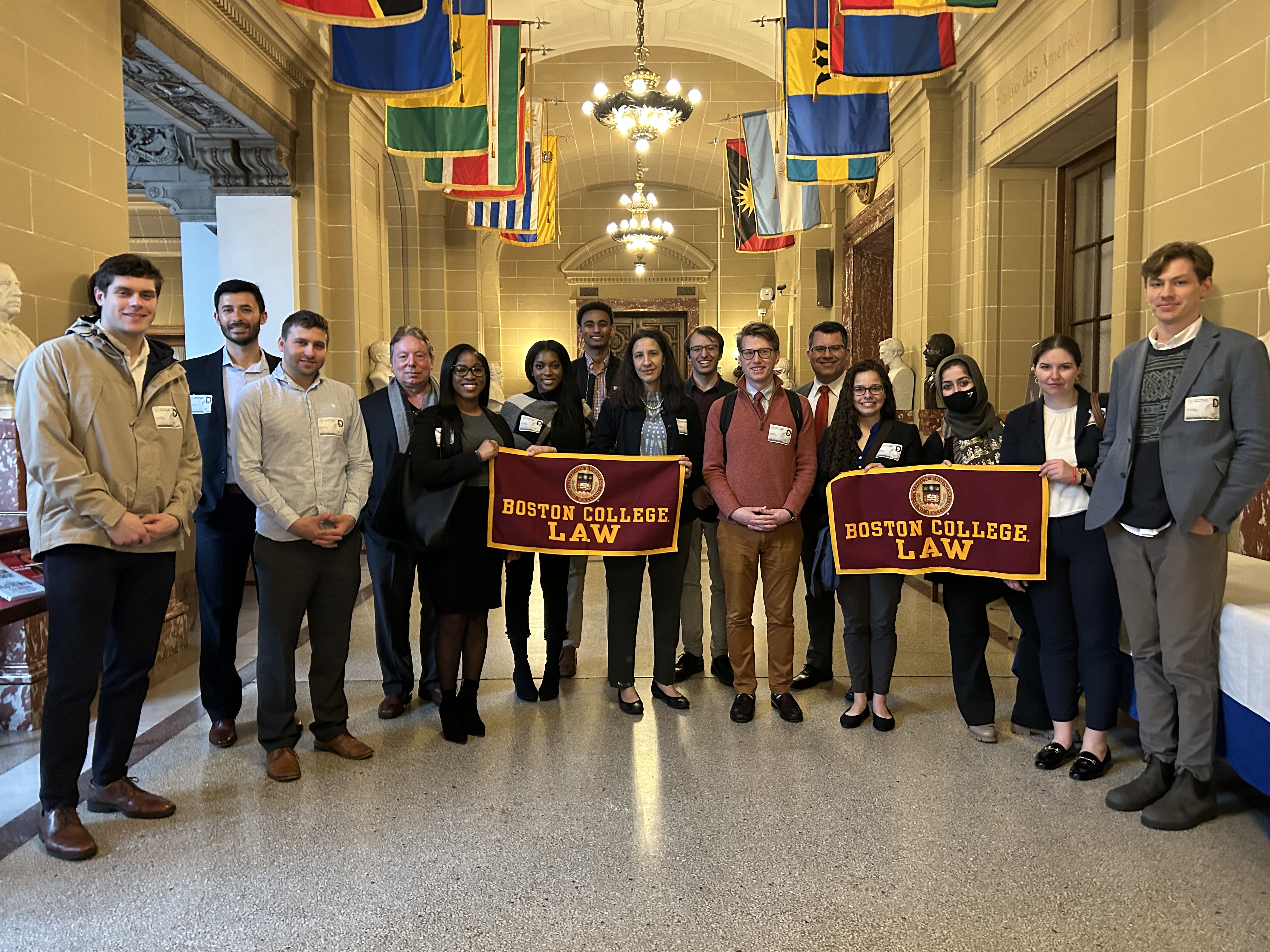
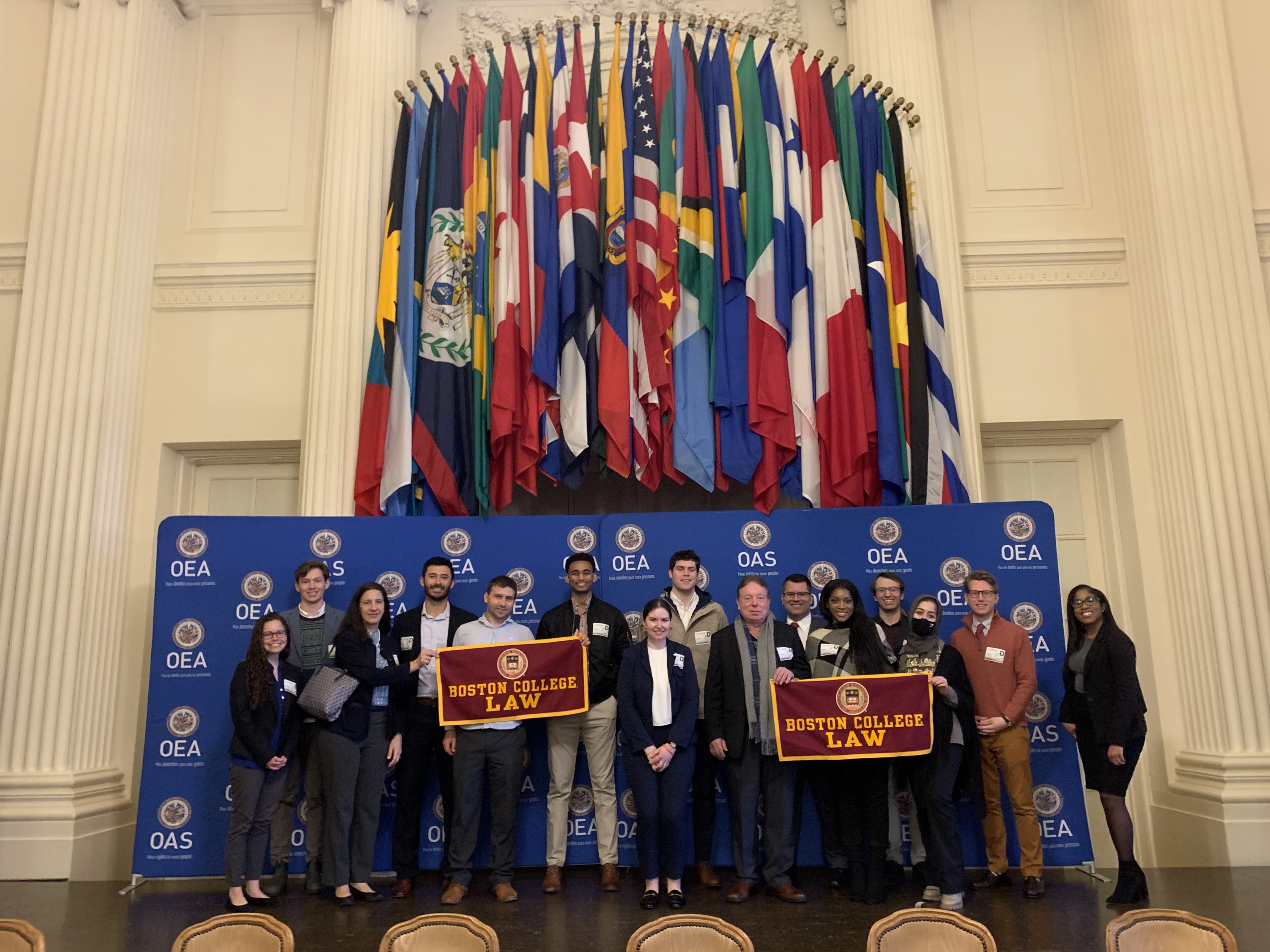
Across borders, the IHR Practicum is part of the human rights clinics network in support of the REDESCA-Inter-American Commission on Human Rights (IACHR). This has allowed Practicum students to work directly with human rights clinics in Peru, Colombia, and Mexico, and to act before foreign courts. Additionally, The IHR Practicum gives students the chance to visit relevant human rights institutions, like the OAS historical building and IACHR headquarters in Washington D.C., and the Inter-American Court headquarters in San José, Costa Rica. You can actually read a fantastic post from a former student, Marija Tesla, describing a recent Inter-American Court visit for BC Law Impact!
Finally, the IHR Practicum is unique since it’s fundamentally a writing clinic that provides students with practical advocacy experience in promoting the international protection of human rights, with particularly focus on research and analysis. If you like to research, write, and argue in favor of human rights topics, this is your clinic.
Does the IHR Practicum have any exciting success stories to share?
So far, the Practicum has submitted ten amicus briefs to the Inter-American Court, two amicus briefs in foreign constitutional courts, and one legal report for the Inter-American Commission. The first one was in 2019 for Azul Rojas v. Peru, a case related to a transgender person who was illegally detained and tortured. Following our amicus argument, the court ordered the State to approve a protocol to avoid subjecting LGBTQ individuals to sexual violence.
An interesting though heartbreaking case we worked on was Luis Guachalá v. Ecuador, related to a mentally disabled person’s disappearance while interned in a public hospital. As the BC Law Magazine highlighted, the ruling in that case constitutes a landmark decision on the right to health protection in the IASHR.
During the 2023 semesters, the Practicum focused on the exciting field of climate change and human rights. It provided significant research and writing support to the IACHR-REDESCA on the thematic Report, “Poverty, Climate Change, and Protection of ESCER in Mexico and Central America in the Context of Human Mobility.” The Practicum also submitted robust written observations in the Advisory Opinion procedure, requested by Colombia and Chile, to the I-A Court on Climate Change and Human Rights.
What do you love most about directing the IHR Practicum?
Seeing how my students acquire new knowledge, particularly in the international human rights field, how their legal skills improve because of what I can teach them, and how their professional enthusiasm for the international human rights field is stimulated by this Practicum gives me the highest satisfaction. Founding and leading the IHR Practicum is my most tremendous pride, not only for the goals accomplished by the students, but also for being part of and adding value to this great academic family at BC Law.

Tess Halpern is a third-year student and president of the Impact blog. Contact her at halperte@bc.edu.
 BC Law: Impact
Pingback: What’s Next for Venezuela? – Boston College Law School Magazine